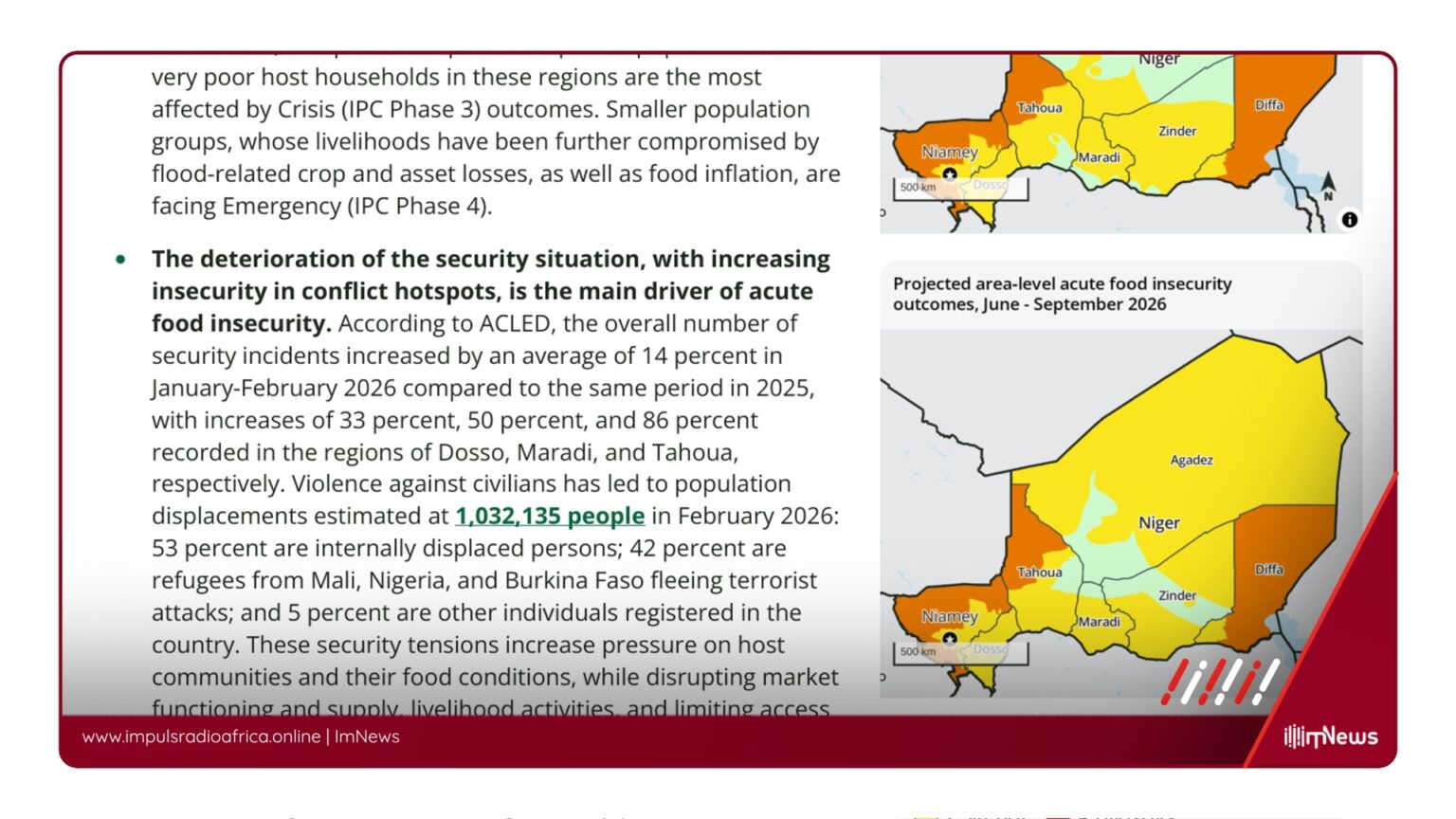
The West African nation of Niger is addressing a multifaceted crisis that is severely impacting the food security of its most vulnerable populations. The regions of Tillabéry, Diffa, and northwestern Tahoua are currently experiencing Crisis (IPC Phase 3) outcomes, a situation largely exacerbated by ongoing conflict. This situation is compounded by recurring flooding and an unfavorable economic climate, according to the Famine Early Warning System Network (FEWS NET).
The lean season, which typically spans from July to September 2026, is expected to see a peak in food needs, driven by depleting food stocks, reliance on market purchases, and the soaring cost of food. Displaced populations and very poor host households in these regions are bearing the brunt of the Crisis (IPC Phase 3) outcomes. Additionally, smaller population groups, whose livelihoods have been undermined by flood-related crop and asset losses, as well as rising food inflation, are now facing Emergency (IPC Phase 4) levels of food insecurity.
Security concerns are at the heart of this crisis. The overall number of security incidents has surged by an average of 14 percent in January-February 2026, with dramatic increases of 33 percent, 50 percent, and 86 percent in the regions of Dosso, Maradi, and Tahoua, respectively. The violence has displaced an estimated 1,032,135 people as of February 2026, with the majority being internally displaced persons, followed by refugees from Mali, Nigeria, and Burkina Faso. This displacement not only strains host communities but also disrupts market functioning, supply chains, and off-season farming activities.
Economic conditions in conflict — affected areas are also dire. Local employment opportunities are scarce, significantly affecting household incomes and purchasing power. While overall inflation has decreased by 10.
1 percent year-on-year, food prices in conflict areas are on the rise. In regions like Bankilaré and Mangaïsé in the Tillabéry Region, millet prices have soared to 290 FCFA/kg in February 2026, compared to the national average of 221 FCFA/kg.
Despite the challenges, the off — season agricultural season, which includes the production of fruit, vegetables, rice, peppers, onions, and other market garden crops, offers a glimmer of hope. However, reduced cultivated areas due to insecurity, particularly in the production basins of Tillabéry and Diffa, have led to lower labor demand and below-average daily wages. The ongoing conflict in the Middle East is also expected to disrupt international markets, potentially increasing the prices of imported food products and further limiting access for households, particularly those in urban and market-dependent areas.
Source: reliefweb
Original author: Famine Early Warning System Network