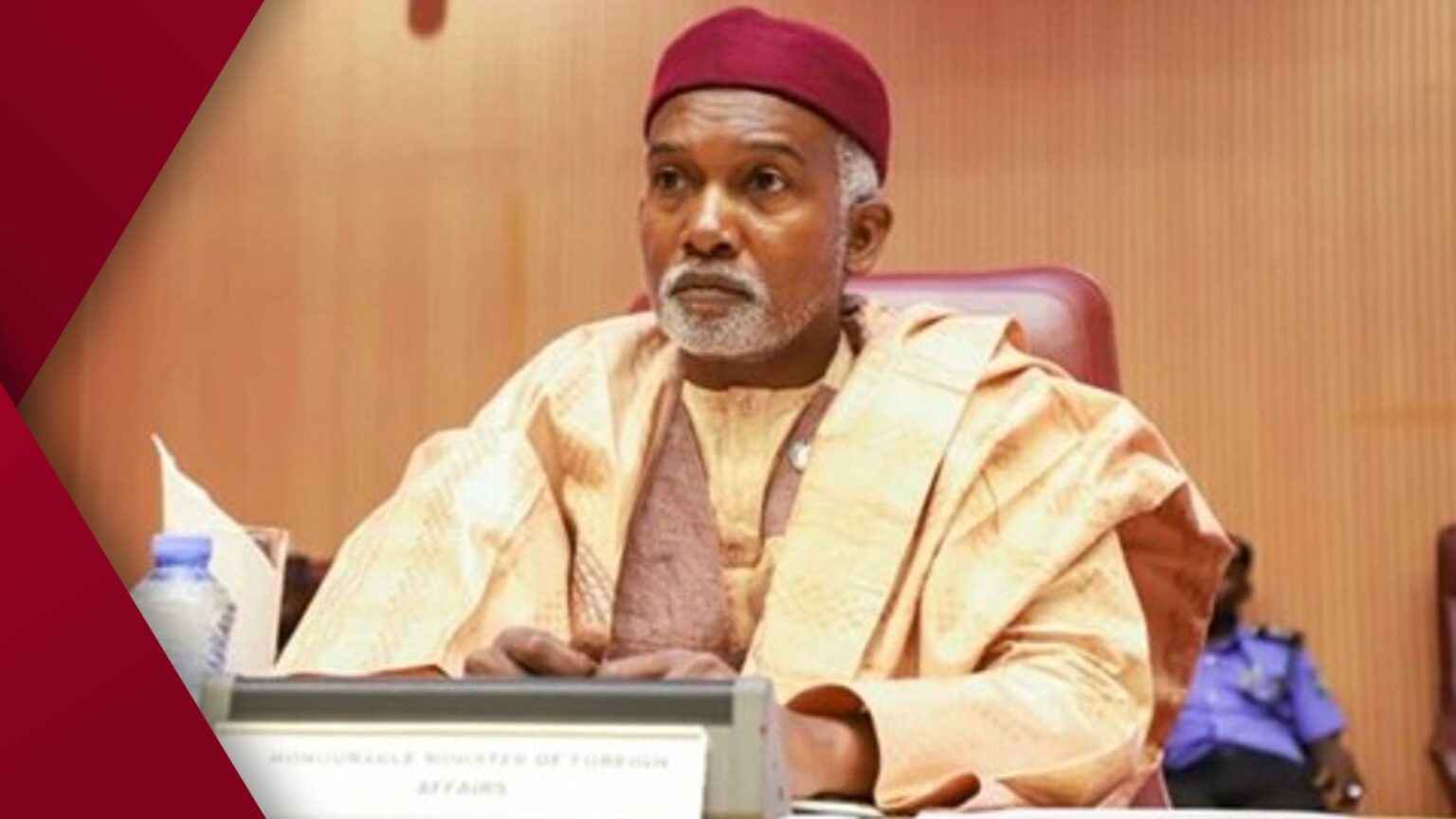
Nigeria’s Foreign Minister Dismisses Religious War Narrative on Terror. Lagos, Nigeria — December 28, 2025 LEAD PARAGRAPH Nigeria’s Foreign Affairs Minister, Ambassador Yusuf Maitama Tuggar, has rejected the notion that terrorism in the country is rooted in a religious conflict, emphasizing a more complex issue intertwined with regional instability and economic challenges. BODY.
In an interview with CNN, Tuggar emphasized the multifaceted nature of Nigeria’s security crisis, attributing it to violent extremism, cross-border instability, weak governance across the Sahel, arms proliferation, and transnational criminal networks. He argued that reducing the issue to a religious war oversimplifies the problem and hinders effective counter-terrorism strategies. “
The first duty of the Nigerian state is to protect innocent lives, and everything else, diplomacy, partnerships, and regional frameworks, must serve that goal, “Tuggar.
He acknowledged that Nigeria’s security is inextricably linked to the instability of its neighbors, pointing to arms flows from Libya and the fragile states across the Sahel as contributing factors to Nigeria’s insecurity. Supporters of Tuggar praised his emphasis on the need for regional cooperation to tackle the issue.
Analysts echoed his views, noting that terrorism thrives in areas with porous borders, freely circulating weapons, and young people with no viable future.
They emphasized the importance of coordinated border security, economic investment, and trust — building among Sahelian states.
However, the reaction at home was mixed. Critics accused the government of downplaying the religious dimension of attacks and questioned the effectiveness of reintegration programs for former Boko Haram fighters.
They also highlighted inconsistencies in government messaging and concerns over military force being insufficient without addressing underlying issues like inequality and institutional weaknesses.
Despite the criticism, there was a general consensus that military force alone cannot solve Nigeria’s security crisis. Tuggar’s emphasis on regional cooperation and partnerships underscores the interconnected nature of today’s security threats and the importance of a holistic approach.
ENDING.
As the debate over Nigeria’s counter-terrorism strategy continues, Tuggar’s comments serve as a call to address the complexities of the issue and prioritize regional cooperation for long-term stability. Further details on the government’s strategies and the outcomes of these discussions are expected in the coming days.