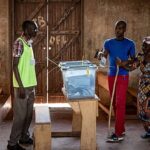
Khartoum, Sudan — South Sudan’s Battle Against Malaria: Persistent Threat Amidst Interventions. South Sudan’s ongoing struggle against malaria remains a pressing issue, despite the implementation of various global health interventions.
The 2025 incidence rate, at 348 cases per 1,000 individuals, underscores the country’s status as one of the most malaria-endemic regions globally. Despite the distribution of over 9. 5 million insecticide-treated nets (ITNs) and the introduction of a malaria vaccine, the disease persists as the leading cause of death, accounting for 64% of inpatient deaths in health facilities.
Geographic Variations and Health System Challenges.
The disease’s impact is most severe on children under five, with a prevalence rate of 52. 6%. Environmental factors, including heavy rains and climate variability, have led to a shift from seasonal to perennial malaria transmission, further complicating the situation.
The country’s fragile health system, compounded by ongoing conflict and displacement, exacerbates the spread of the disease. Global Efforts and Future Challenges. Despite these challenges, efforts to combat malaria are ongoing.
The Against Malaria Foundation (AMF) has committed to fund the distribution of 9. 5 million ITNs in South Sudan in 2026.
The World Health Organization (WHO) has been instrumental in delivering life-saving health services, sustaining outbreak response, and supporting essential care across conflict-affected and hard-to-reach areas.
However, the integration of climate and mosquito behavior data into malaria policy is crucial for effective control. Incorporating Climate and Mosquito Behavior Data.
According to a study by Integrating mosquito behavior and transfusion risk for evidence — based malaria policy, incorporating a deterministic malaria transmission model that accounts for transfusion-mediated infections and distinct diurnal and nocturnal mosquito biting rates is essential for informed policy-making. Local health officials emphasize the importance of incorporating climate and mosquito behavior data into malaria policy to effectively combat the disease.
The Role of Conflict and Displacement. Aisha Osman, Director of the National Malaria Control Program in South Sudan, highlights the role of ongoing conflict and displacement in hindering access to healthcare and contributing to the persistence of the disease.
As World Malaria Day 2026 approaches, the global community is reminded of the ongoing fight against malaria. Progress has been made, but there is still much work to be done, especially in countries like South Sudan, where the disease remains a persistent threat to public health and development.
A Global Responsibility.
The challenge of eradicating malaria in South Sudan is not just a local issue; it is a global one.
The international community must continue to support efforts to combat malaria, particularly in regions where the disease remains endemic and poses a significant burden on public health and economic development.
*Additional reporting by ImNews | Sources consulted: 5*
—
This original article was produced by the ImNews editorial team
Source: reliefweb
Source: World Health Organization