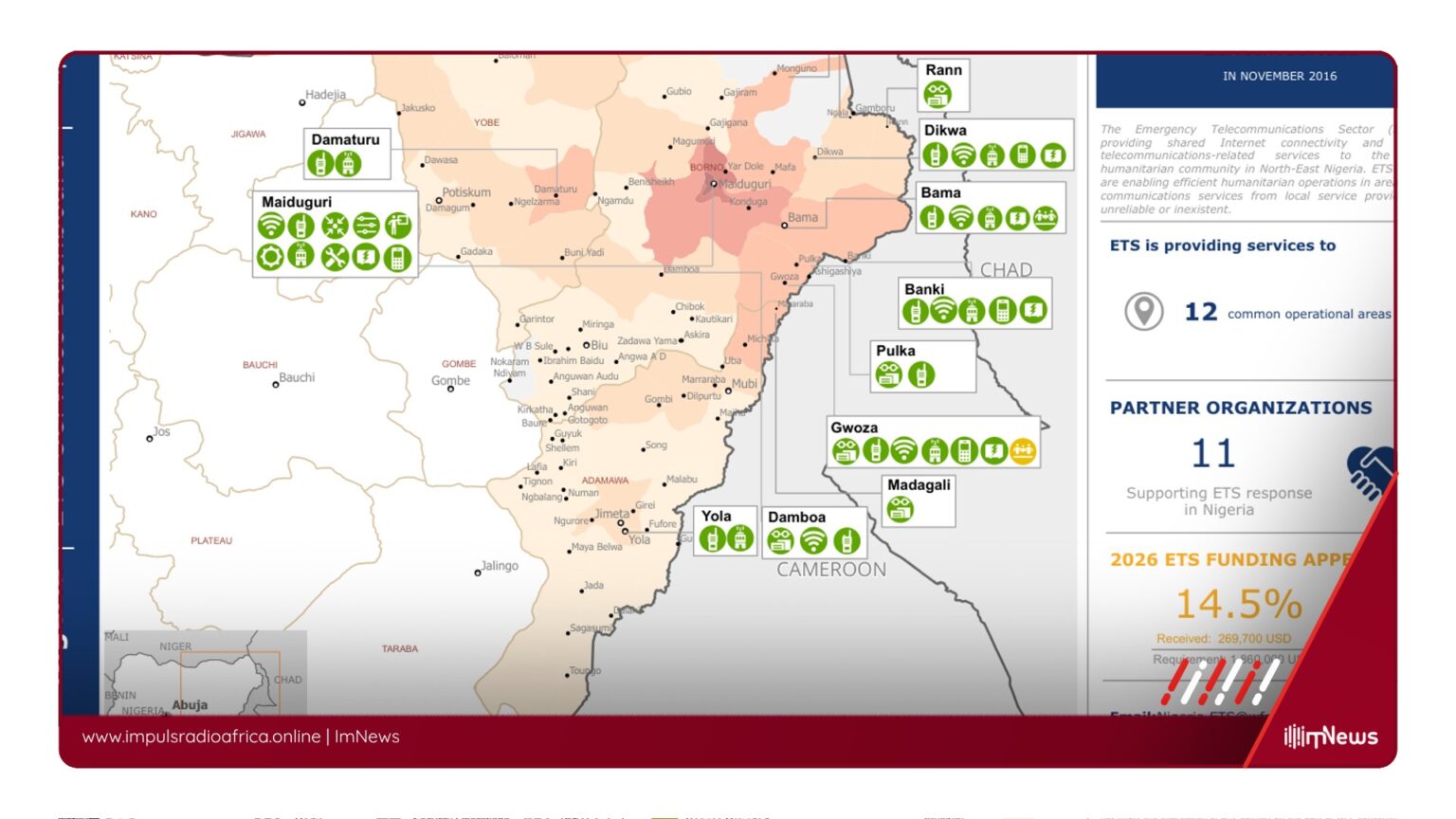
Nigeria’s Emergency Telecommunications Efforts Show Mixed Progress in 2026 BODY: Lagos, Nigeria – The Emergency Telecommunications Cluster (ETC) has been a vital component of Nigeria’s response to humanitarian crises, particularly in the context of protection crises. Since its activation in November 2016, the ETC has been working to ensure that telecommunications services are available and secure for those in need.
As of April 2026, the ETS Nigeria Dashboard reveals that 487.
2 thousand people have been reached out of a target population of 2. 5 million, with a funding percentage of 39.
3%.
The ETC’s focus on protection crises underscores the critical need for secure communication in emergency situations.
In Nigeria, where various crises affect the population, the ETC’s efforts are aimed at providing life-saving assistance.
However, the current funding levels and the percentage of the population reached highlight the challenges in fully addressing the needs of those affected.
The World Bank’s Nigeria Development Update for April 2026 offers a broader perspective on the economic and social developments in Nigeria. It provides insights into the country’s progress and challenges, which can be contrasted with the humanitarian needs as reported by the ETC and the World Food Programme.
The update indicates that Nigeria faces significant economic and social challenges, which further underscore the importance of effective telecommunications services in humanitarian response.
The ETS Nigeria service catalogue and user satisfaction survey report from 2025 provide a detailed look into the services offered by the ETC and the feedback received from users.
The report indicates a focus on service delivery and feedback, which is crucial for improving the efficiency and effectiveness of the ETC’s operations. What specific protection crises are being addressed by the ETC in Nigeria?
The Dashboard does not provide specific details, but it is clear that the ETC is working to ensure that telecommunications services are available in areas affected by various crises, including conflict and displacement. How does the ETS’s telecommunications support integrate with other humanitarian response efforts in Nigeria?
The ETC works closely with other humanitarian agencies to ensure that telecommunications services are part of a comprehensive response to crises.
This includes providing internet connectivity, telephony, and other communication services that are essential for coordination and communication among humanitarian actors. What are the main economic and social challenges highlighted in the World Bank’s Nigeria Development Update?
The report highlights challenges such as poverty, inequality, and governance issues.
These challenges are compounded by the country’s economic vulnerabilities, including low growth, high inflation, and limited fiscal space.
The ETC’s efforts in Nigeria are a testament to the importance of telecommunications in humanitarian response.
However, the current level of funding and the percentage of the population reached indicate that there is still much work to be done.
As Nigeria continues to face various crises, the ETC’s work will be crucial in ensuring that those in need have access to the telecommunications services they require.
The World Bank’s Nigeria Development Update provides a reminder of the broader economic and social challenges that Nigeria faces. Addressing these challenges will require a multi-faceted approach, including efforts to improve governance, promote economic growth, and provide essential services such as healthcare and education.
As Nigeria grapples with its humanitarian and economic challenges, the ETC’s work will remain critical.
The Dashboard’s funding percentage and the number of people reached highlight the need for increased support to ensure that the ETC can continue to provide essential telecommunications services to those in need.
In conclusion, the ETC’s efforts in Nigeria demonstrate the importance of telecommunications in humanitarian response.
As Nigeria continues to face various crises, the ETC’s work will be crucial in ensuring that those in need have access to the telecommunications services they require.
The challenges highlighted by the World Bank’s Nigeria Development Update underscore the need for a comprehensive approach to addressing the country’s economic and social challenges.
*Additional reporting by ImNews | Sources consulted: 5*
—
This original article was produced by the ImNews editorial team
Source: reliefweb
Source: Emergency Telecommunications Cluster