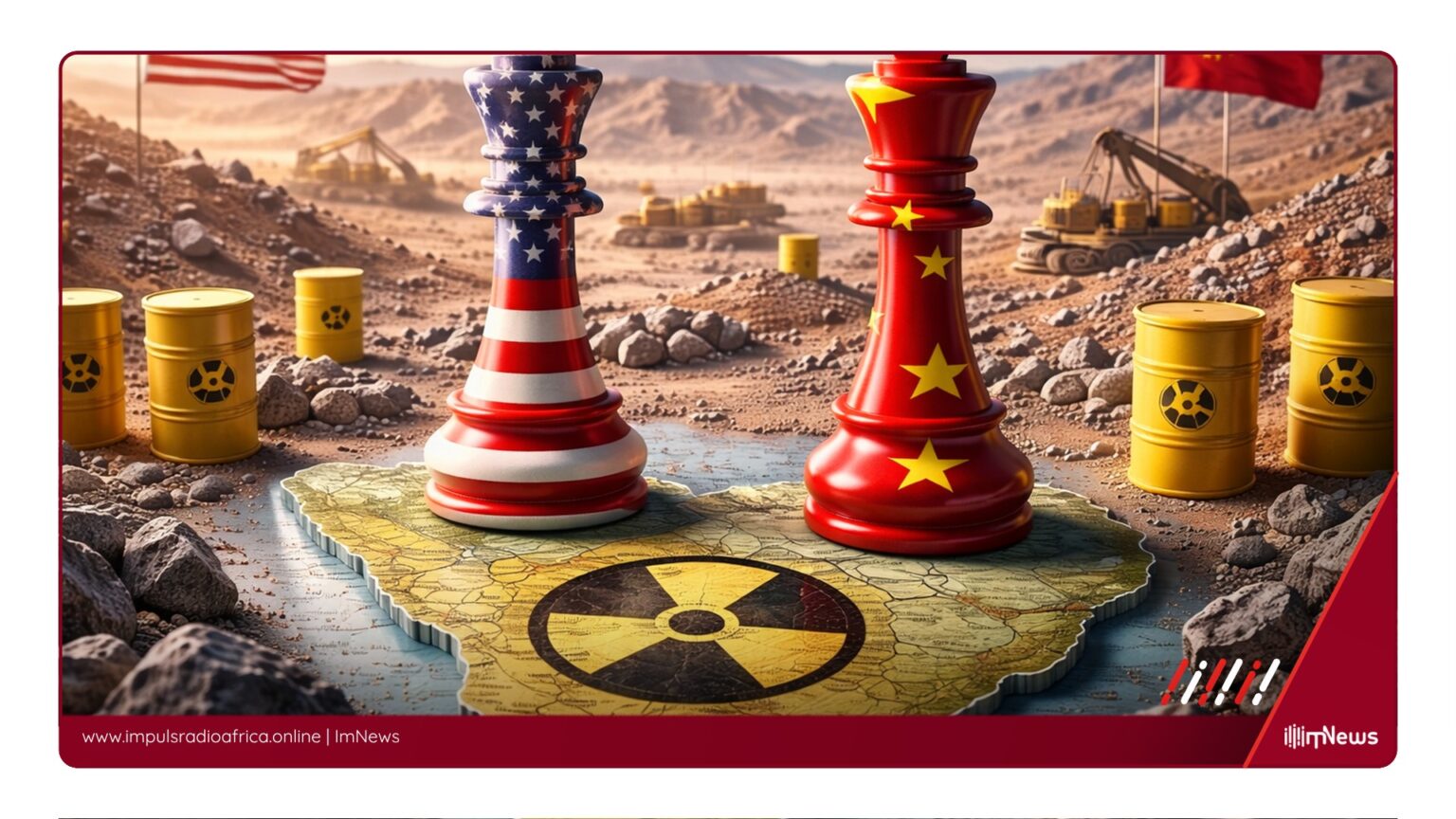
Kinshasa, DRC — The United States is poised to deepen its engagement in Africa’s mineral sector, specifically targeting Namibia, the continent’s preeminent uranium producer, as part of a strategic push for energy security and to counterbalance China’s influence. This development has been announced by John Giordana, the U. S.
Ambassador to Namibia, who underscored the escalating American interest in the uranium industry, traditionally dominated by Chinese capital.
In a significant address at the recent Powering Africa Summit in Washington, D. C. Ambassador Giordana outlined a multi-faceted strategy aimed at bolstering U.
S. -Namibian relations, enhancing energy security, and securing stable supply chains. This strategic shift is underpinned by U.
S. -led investment and partnerships with American companies, which are intended to support local production and development in Namibia. During the summit, Giordana emphasized the pivotal role of reliable energy, secure supply chains of critical minerals, and the necessary infrastructure to scale up both, underlining that countries like Namibia, which can provide these elements, will play a crucial role in shaping the global economy in the coming decades.
The ambassador further elaborated on these objectives in an interview with Bloomberg on April 17. He highlighted the rising global demand for uranium, driven by the expansion of nuclear power, and described uranium as a key area of focus for both the U. S.
And Namibia. Although no specific projects or investments have been announced, it is clear that efforts are underway to align U. S.
Commercial interests with Namibia’s mining sector. Namibia’s mining sector, particularly its uranium production, has long been a source of significant revenue for the country. With China being a major investor and buyer, the U.
S. ‘s new approach could potentially reshape the geopolitical landscape of uranium trade, leading to increased competition and changes in global supply chains.
As the U. S. Seeks to expand its footprint in Africa’s critical minerals sector, it is doing so amidst efforts to reduce dependence on China.
Beyond Namibia, the U. S. Is reportedly exploring deeper ties with other resource-rich African nations, such as the Democratic Republic of Congo, to secure supplies of cobalt and copper.
This strategic shift comes at a time when the global demand for critical minerals is on the rise, with Africa increasingly becoming a key battleground in the U. S. -China economic rivalry.
As details of the U. S. ‘s plans with Namibia unfold, the response from China and other major uranium producers will be closely watched, as the implications for the global uranium market could be substantial.
—
By This original article was produced by the ImNews editorial team
Source: Africa.businessinsider
Source: Solomon Ekanem