New York, NY, April 13, 2026 – The International Rescue Committee (IRC) has sounded the alarm over a significant shortfall in global aid, which it deems a critical threat to the lives of millions in conflict-affected regions. In its latest policy paper, “The New World Disorder: Rethinking Aid in an Era of Scarcity, “the IRC asserts that this shortfall is not a fleeting issue but a structural shift, exacerbated by geopolitical tensions and a retreat from international commitments.
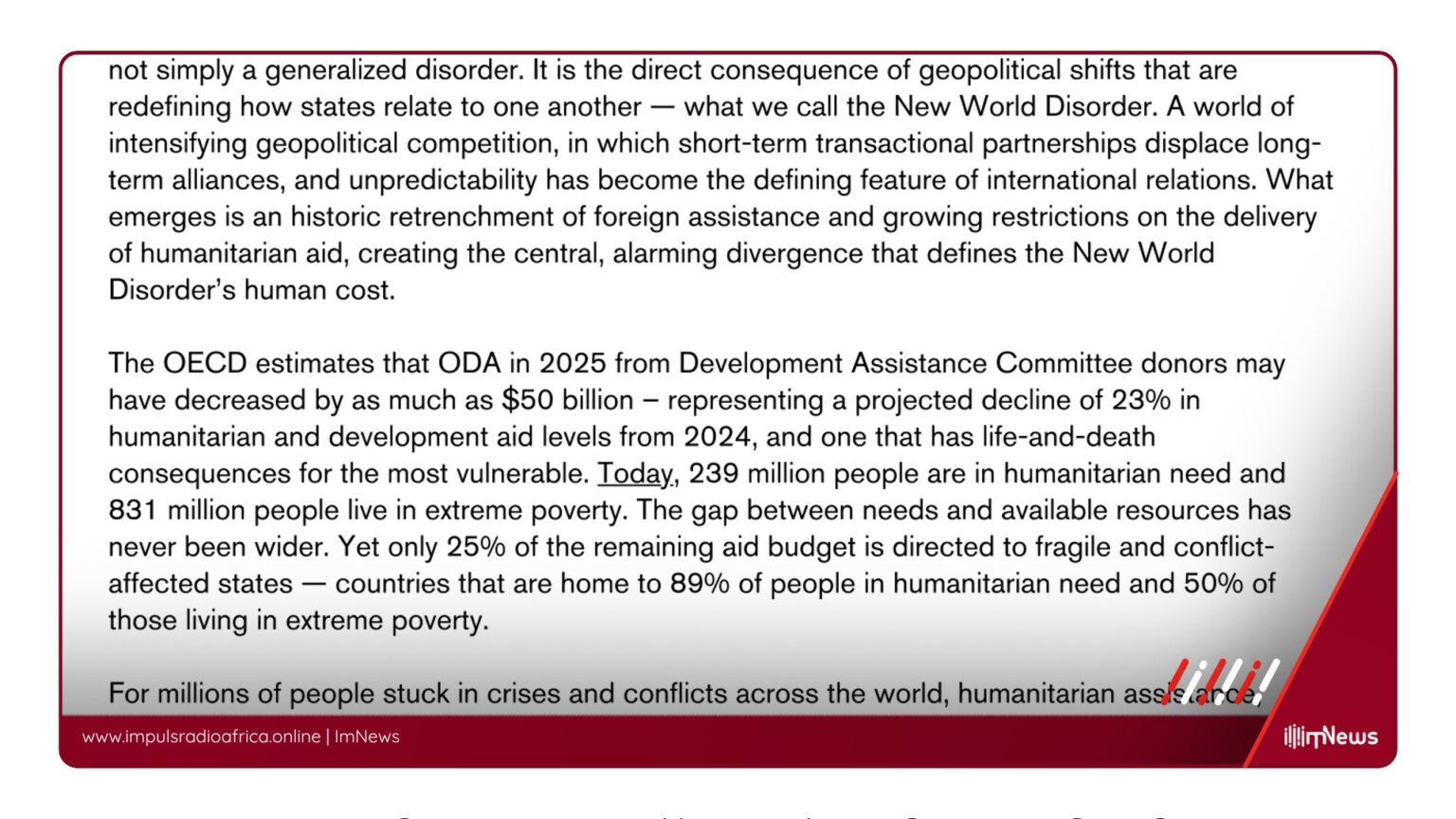
The report reveals that 239 million people are in need of humanitarian assistance, with 831 million living in extreme poverty. The aid deficit in 2025 may have reached $50 billion, a decrease of over 23%. Notably, only 25% of aid is directed to fragile and conflict-affected states, where the majority of global need and extreme poverty are concentrated.
This gap, according to the IRC, reflects a deeper breakdown in the global system. The post-war rules-based order is giving way to a fragmented “New World Disorder, “marked by heightened geopolitical competition, short-term alliances, and a decline in protections for civilians and aid delivery. Conflicts are multiplying, growing longer-lasting, and more complex, with shifting alliances and fewer diplomatic solutions.
The humanitarian systems in Iran and Lebanon are under immense strain, further complicated by global shocks such as rising food, fuel, and fertilizer prices, and supply chain disruptions. These challenges are not only increasing the cost of aid delivery but also threatening the livelihoods and basic services of vulnerable populations, thereby increasing the risk of further conflict and displacement.
David Miliband, President and CEO of the IRC, emphasized the need for a transformative approach to international aid. He advocated for prioritizing conflict-affected populations, investing in proven, cost-effective programs, and harnessing technological innovations to improve delivery. Despite the resource constraints, the IRC highlights the existence of effective solutions, such as the REACH immunization program, which has administered 30 million vaccine doses since 2022.
The report calls for a reset in how aid is funded and delivered, recommending that at least 60% of aid reaches fragile and conflict-affected states, expanding partnerships with local actors, prioritizing humanitarian access, and investing in scalable innovations. The urgency of these recommendations is underscored by the millions of lives at stake, and the IRC’s report serves as a call to action for participants of the Spring Meetings of the World Bank and International Monetary Fund (IMF).
Source: reliefweb
Original author: International Rescue Committee