In a stark revelation, the report highlights that acute hunger has doubled over the past decade, with two famines declared in 2025, marking the first occurrence in the report’s history. Gaza and parts of Sudan were identified as the epicenters of these crises.
The primary driver of this crisis remains ongoing conflict, which has led to severe hunger affecting over half of the population in crisis — affected areas. Ten countries, including Afghanistan, Bangladesh, the Democratic Republic of the Congo, Myanmar, Nigeria, Pakistan, South Sudan, Sudan, Syrian Arab Republic, and Yemen, are responsible for two-thirds of the acutely hungry population.
The report emphasizes that the crisis has evolved from a temporary to a structural issue, necessitating long — term solutions.
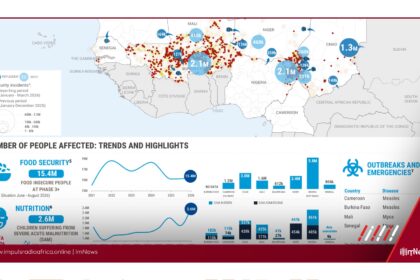
An estimated 35. 5 million children were acutely malnourished in 2025, with nearly 10 million suffering from severe acute malnutrition.
The situation is particularly severe in Nigeria, where nearly 5. 4 million children aged 0-59 months in the northwest and northeast regions are affected. UN Secretary-General António Guterres has called for the global community to summon the political will to rapidly scale up investment in lifesaving aid and to address the root causes of the crisis.
He stressed the urgency of investing in sustainable food systems and ending conflicts that cause immense suffering. Despite the critical situation, the report indicates a concerning trend of decreasing funding for food security and nutrition, which has fallen to levels not seen since 2016. This decline threatens the response capacity of governments and humanitarian actors to address the crisis effectively.
The report serves as a call to action for governments, international organizations, and the global community to address the complex factors contributing to the food crisis. It underscores the need for sustainable solutions that ensure food security for all in the long term.
The situation in Africa is particularly concerning, with the continent bearing the brunt of the crisis.
The UN and EU, along with other partners, are working together to provide lifesaving aid and support sustainable food systems.
However, the challenges are immense, and the road to recovery will be long and arduous.
The report underscores the need for a coordinated and comprehensive approach to address the complex factors contributing to the food crisis. This includes addressing conflict, improving agricultural productivity, ensuring equitable access to food, and investing in social protection programs.
As the situation continues to worsen, the global community must act now to ensure that no one is left behind in the fight against hunger and malnutrition.
*Additional reporting by ImNews | Sources consulted: 5*
—
This original article was produced by the ImNews editorial team
Source: africa
Source: Editor