The Sahel region, a geographical and political crossroads in Africa, continues to face a complex humanitarian crisis, with Burkina Faso emerging as one of the most affected countries.
According to the UN Office for the Coordination of Humanitarian Affairs, the situation in the Sahel is marked by a convergence of violence, conflict, climate shocks, and political instability, leaving millions in a state of vulnerability.
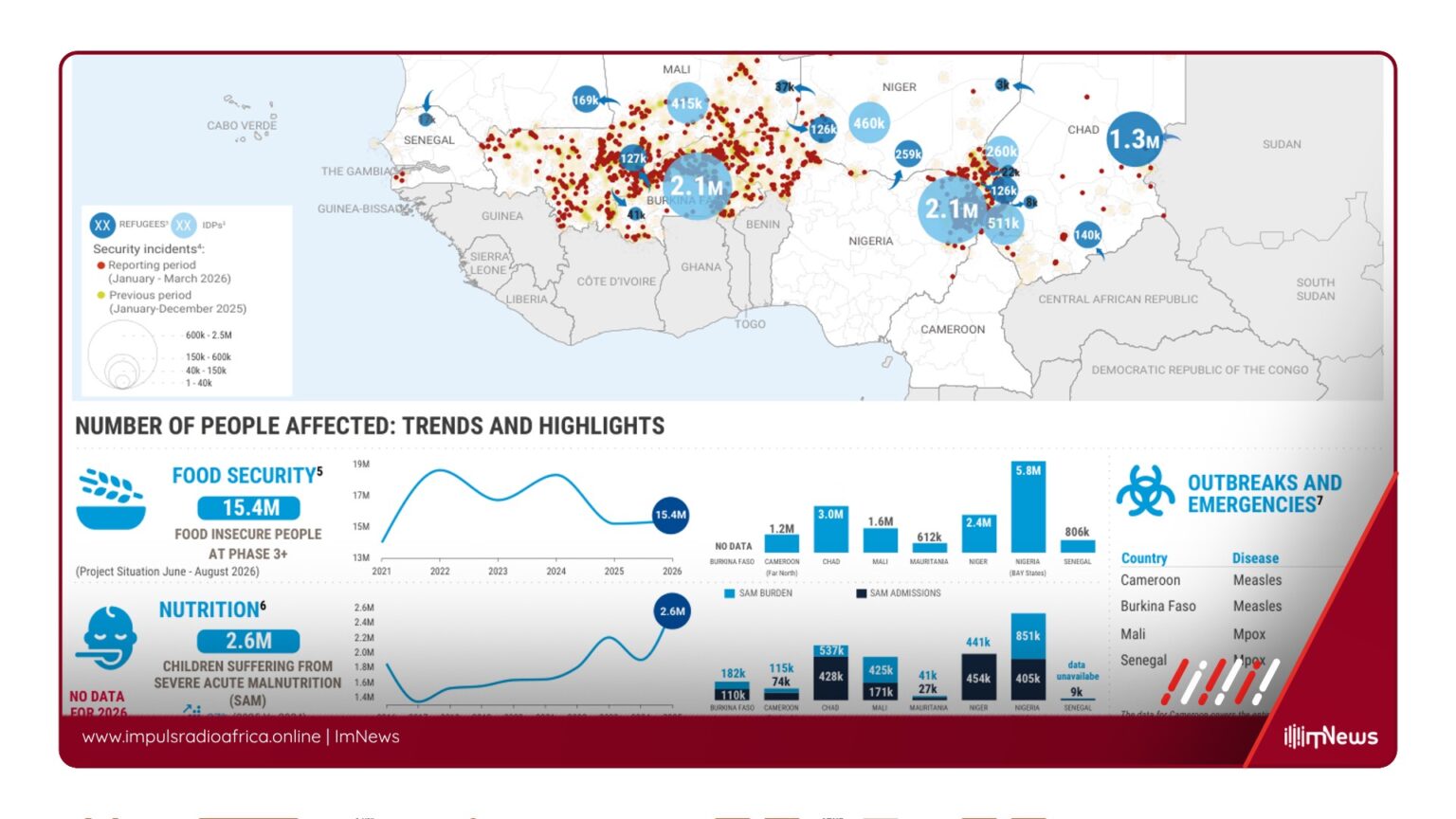
The crisis has led to the internal displacement of 5. 8 million individuals, with 2. 6 million seeking refuge in neighboring countries.
Nigeria and Burkina Faso bear the brunt of the displacement, hosting over 70% of internally displaced persons (IDPs). Chad, on the other hand, has taken in over 58% of refugees, predominantly from Sudan.
In 2026, approximately 24. 4 million people across the Sahel require humanitarian aid, a decrease of 22% from the 31. 3 million who needed assistance in 2025.
However, this reduction is attributed to a new targeting methodology based on accessible zones rather than an improvement in the overall situation.
The most vulnerable include 8. 2 million people, with 2. 5 million in Nigeria, 1.
7 million in Chad, 1. 5 million in Mali, and 1. 2 million in Burkina Faso, followed by Cameroon and Niger.
Food insecurity is on the rise, with projections indicating that 15. 4 million people will be in IPC Phase 3 or above, indicating crisis and worse, between June and August 2026. This figure represents a 38% increase from the previous projection period in December 2025.
The review period also saw measles outbreaks in Nigeria and Burkina Faso, with 3,688 and 2,562 cases, respectively. This underscores the urgency to bolster health systems and enhance vaccination efforts. Despite the scale of the crisis, humanitarian operations are critically underfunded.
As of April 2026, only 19% of the required US$ 3. 7 billion has been secured.
The operational environment is also becoming increasingly volatile, with security incidents including the kidnapping of an aid worker in Nigeria, which have further restricted humanitarian access across the region.
*Additional reporting by ImNews | Sources consulted: 5*
—
This original article was produced by the ImNews editorial team
Source: reliefweb
Source: UN Office for the Coordination of Humanitarian Affairs