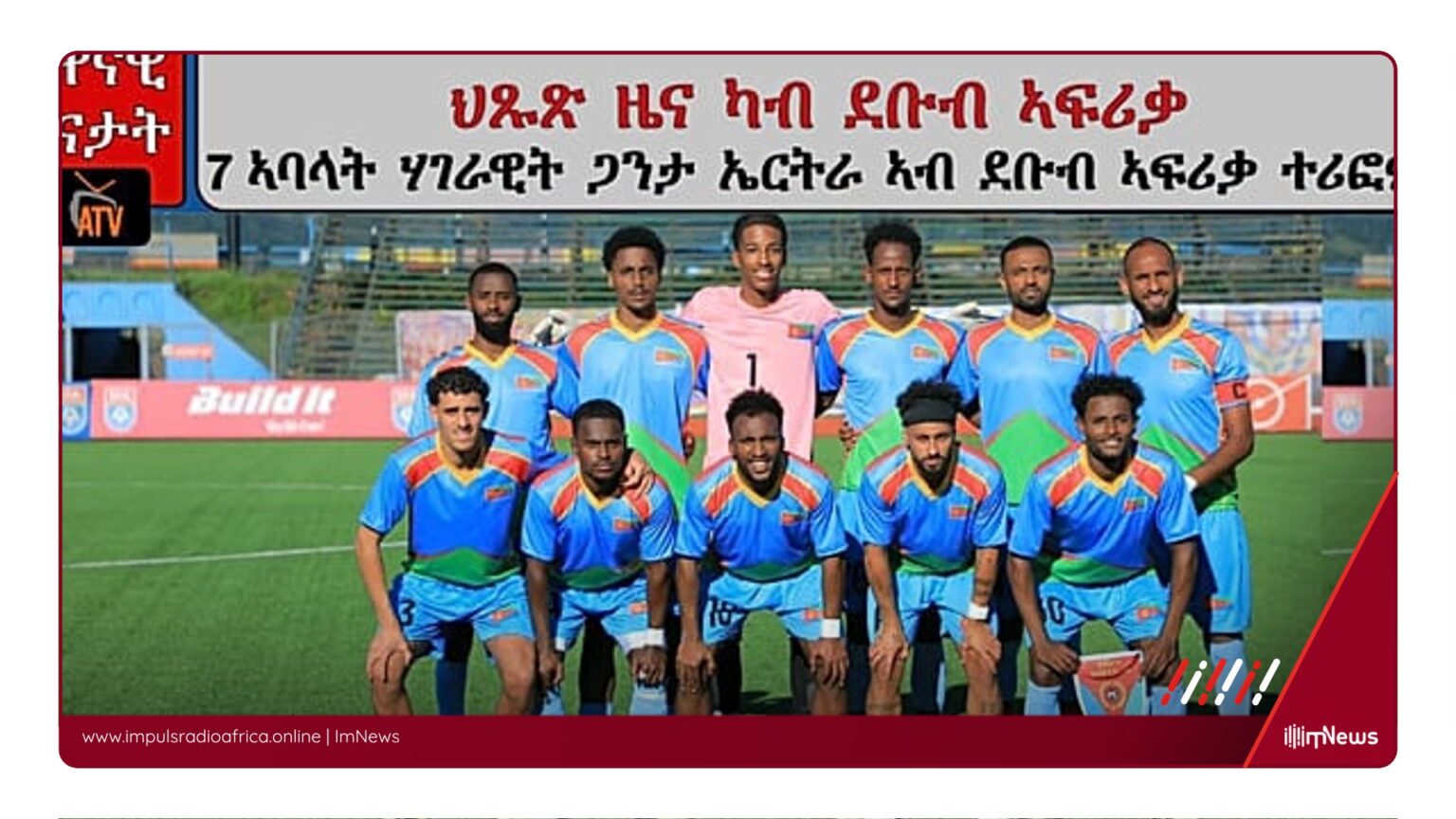
Seven members of the Eritrea national football team have vanished following their team’s recent 2–1 away win over Eswatini, which secured a place in the qualifying group stage of the Africa Cup of Nations for the first time in nearly two decades. The team’s victory, a 4–1 aggregate triumph, should have been celebrated; however, the event has been overshadowed by the disappearance of several players. Among those unaccounted for are goalkeeper Kubrom Solomon and experienced winger Medhanie Redie.
While a portion of the 24-man squad, which was largely based outside Eritrea, made its way back home via South Africa, the missing players are believed to have remained behind. Team captain Ablelom Teklezghi, one of the few home-based players, is among the few who have returned to Asmara. State media in Eritrea, which typically celebrates national team successes with public fanfare, has remained silent on the matter. Plans for a welcome reception for the players were reportedly scrapped after news of their disappearance.
Images later shared by officials depicted some members of the delegation stopping in Cairo, where they were greeted by embassy representatives and members of the Eritrean community before resuming their journey. This incident follows a pattern that has emerged over the years with Eritrean teams competing abroad. Multiple players, and in some cases, entire squads, have chosen not to return after international assignments.
Human rights organizations have long expressed concerns about conditions in Eritrea, describing the state as highly restrictive — a claim the government refutes. The country has also witnessed a significant number of its citizens seeking asylum overseas. Similar episodes have occurred in the past.
In 2019, several members of the under-20 team went missing during a regional tournament in Uganda. In 2015, a group of senior players failed to return after a World Cup qualifier in Botswana. In 2013, more than a dozen players and staff sought asylum in Uganda, and in 2009, nearly the entire senior squad did not return following a trip to Kenya.
For many supporters, the triumph should have been a source of pride for Eritrean football, but instead, it serves as a stark reminder of ongoing and unresolved issues within the country.