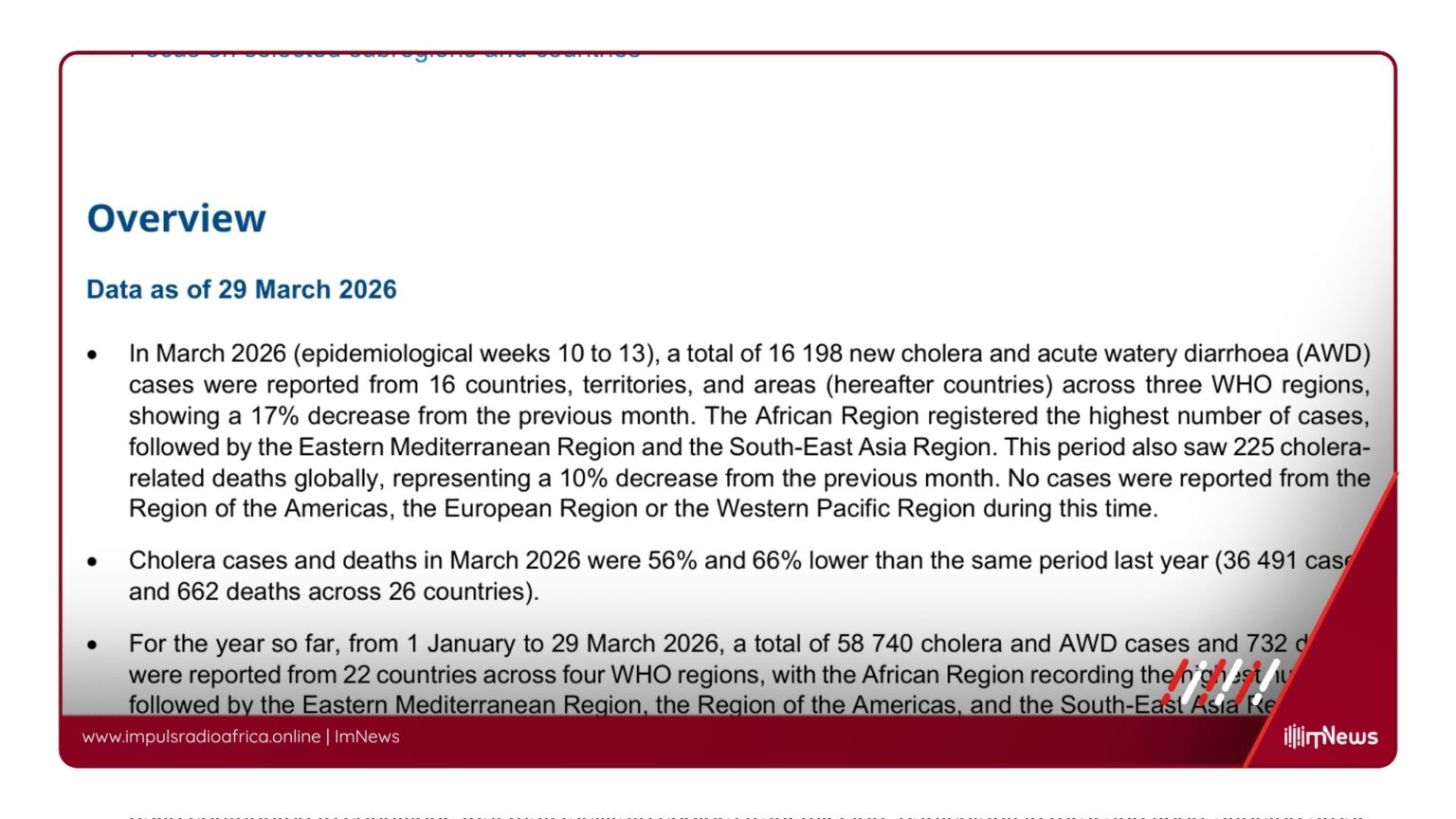
Cotonou, Benin — A recent epidemiological update from the World Health Organization (WHO) reveals a concerning surge in cholera cases across multiple countries, with the African Region bearing the brunt of the outbreak. From January 1 to March 29, 2026, a total of 58,740 cholera and acute watery diarrhoea (AWD) cases were reported globally, resulting in 732 deaths.
The African Region accounts for 34,348 cases and 721 deaths, with the Democratic Republic of the Congo (DRC) being the hardest hit.
In March 2026, there was a 17% decrease in new cases compared to February, yet the number of cases has increased significantly compared to the same period in 2025. Cholera, caused by the bacterium Vibrio cholerae, spreads through contaminated food and water, often from faeces. It can be prevented with access to safe water and sanitation but can be fatal if not treated promptly.
The WHO has emphasized the high global risk of the ongoing outbreak, urging urgent action to reduce deaths and contain the spread.
The global shortage of Oral Cholera Vaccines (OCVs) continues to complicate response efforts, while ongoing conflicts and displacements in affected regions limit the effectiveness of response measures.
The situation in the DRC is particularly concerning, as the country grapples with both the cholera outbreak and the ongoing conflict.
The impact on the health system and the ability to respond to the outbreak is significant.
The WHO and other health organizations are calling for increased funding and resources to address the crisis effectively.
The cholera outbreak serves as a stark reminder of the interconnectedness of global health and the importance of investing in health systems and infrastructure, particularly in vulnerable regions.
As the situation evolves, the world will be watching closely to see how the crisis is managed and what lessons can be learned to prevent future outbreaks.
*Additional reporting by ImNews | Sources consulted: 5*
—
This original article was produced by the ImNews editorial team
Source: reliefweb
Source: World Health Organization