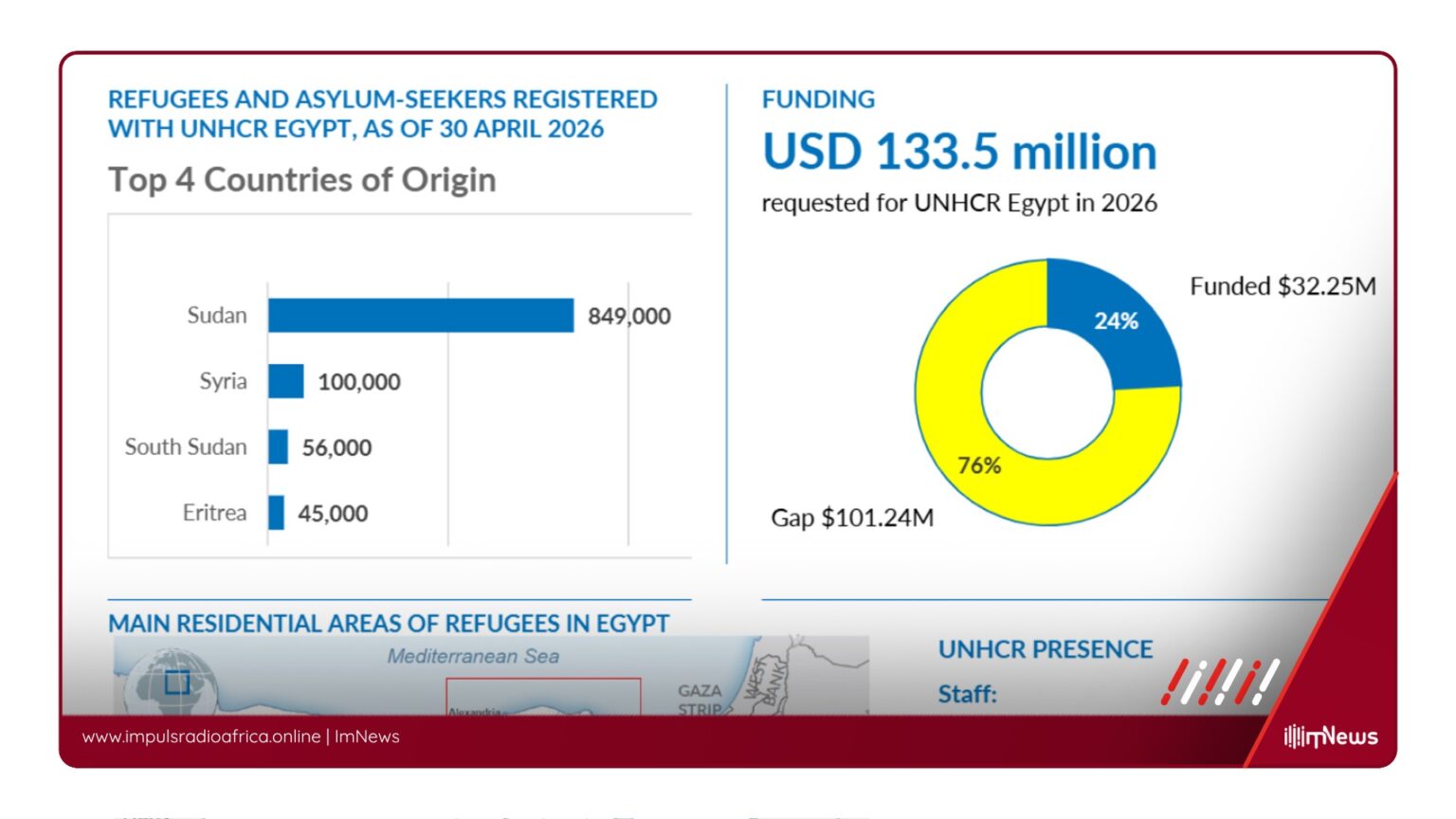
Refugee Crisis in Egypt: UNHCR’s Efforts and Egypt’s Asylum Law BODY: Cairo, Egypt – As of April 2026, Egypt hosts approximately 1,100,600 refugees and asylum-seekers, with Sudanese refugees forming the largest group, accounting for over 77. 2% of the total registered population, followed by Syrians with 13. 7%.
The majority of these individuals reside in Greater Cairo and Alexandria, reflecting the complex humanitarian situation in the country. Established in 1954, the United Nations High Commissioner for Refugees (UNHCR) has been a pivotal presence in Egypt, providing essential services such as protection, registration, documentation, and resettlement to forcibly displaced persons.
The recent enactment of Egypt’s first asylum law in December 2024, with UNHCR’s support, marks a significant development in the management and rights protection of refugees.
UNHCR’s reports underscore the urgency of addressing the needs of newly arrived Sudanese refugees, emphasizing the need for a robust response to avert a humanitarian crisis.
The new asylum law is seen as a positive step towards improving the management and rights protection of refugees in Egypt.
However, specific measures taken by UNHCR to intensify protection and assistance efforts for Sudanese refugees remain unclear.
Similarly, the implementation of the new asylum law and its impacts on the rights and well — being of refugees and asylum-seekers are yet to be fully assessed. Living conditions for refugees and asylum-seekers, particularly in the bustling cities of Greater Cairo and Alexandria, are of concern.
The challenges faced by Sudanese refugees in Egypt, including access to basic services and employment opportunities, are compounded by the ongoing conflict in their home country.
The key components of Egypt’s first asylum law and how they align with international standards are subjects of interest.
Additionally, understanding the challenges faced by Sudanese refugees and the current responses from the Egyptian government and other stakeholders is crucial for a comprehensive analysis of the situation. UNHCR’s role in providing protection and assistance to refugees in Egypt is undeniable.
The organization’s efforts are vital in ensuring that the rights and well-being of displaced persons are upheld.
As Egypt continues to grapple with the complexities of hosting a large refugee population, the implementation of the new asylum law and the effectiveness of UNHCR’s programs will be closely monitored.
The situation of refugees and asylum — seekers in Egypt is a testament to the ongoing global refugee crisis and the challenges faced by host countries.
It underscores the need for international cooperation and support to address the needs of displaced persons and to create sustainable solutions for their integration or repatriation.
In conclusion, the refugee crisis in Egypt is a multifaceted issue requiring a coordinated approach from the Egyptian government, international organizations, and the global community.
The role of UNHCR in providing essential services and advocating for the rights of refugees is critical in this context.
*Additional reporting by ImNews | Sources consulted: 3*
—
This original article was produced by the ImNews editorial team
Source: reliefweb
Source: UN High Commissioner for Refugees