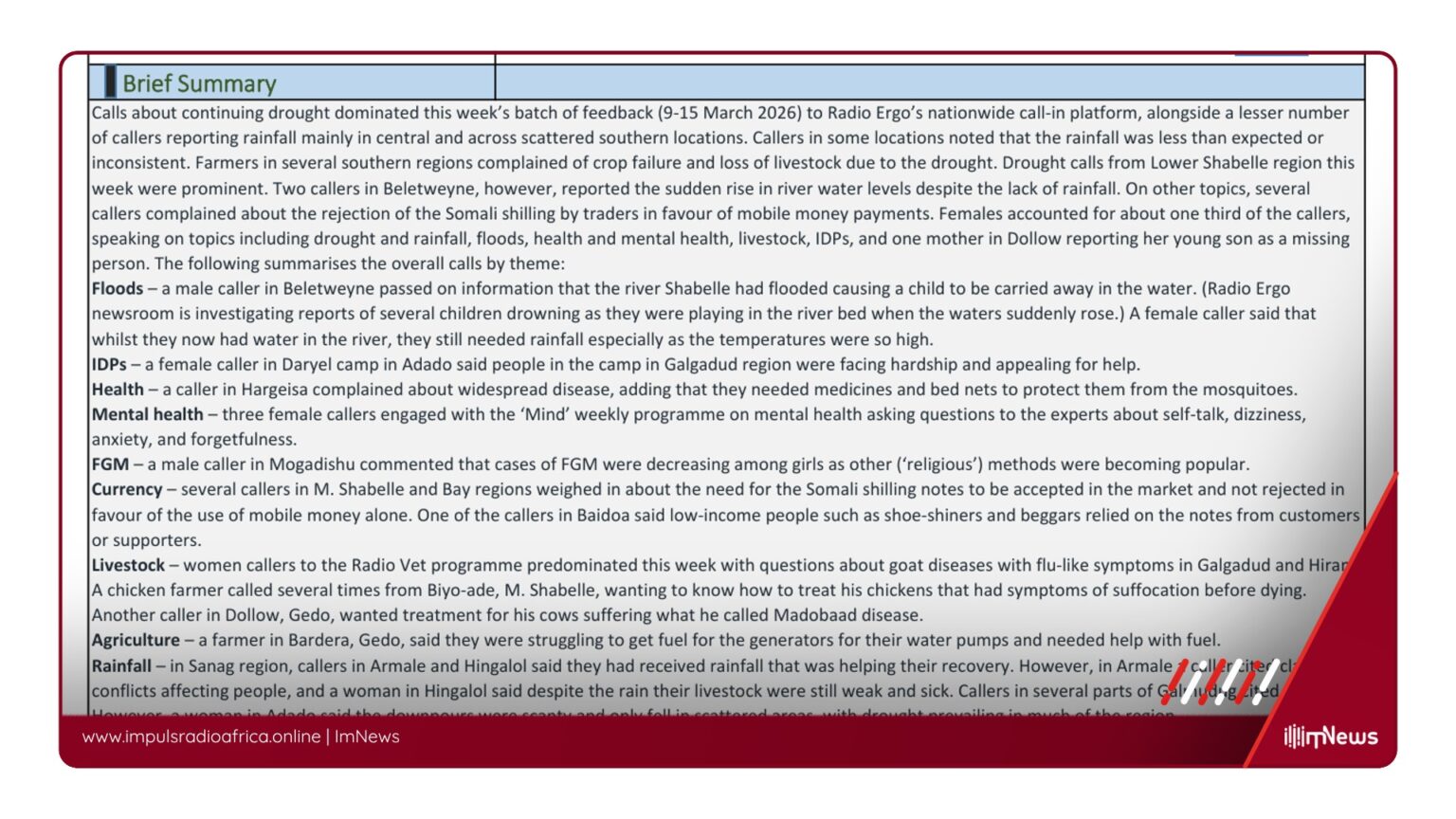
Mogadishu, Somalia — April 17, 2026 A severe dual crisis of drought and conflict has deepened the humanitarian situation in Somalia, as revealed by the latest Radio Ergo Weekly Feedback Report, issued on April 17, 2026.
The report, spanning March 9 to 15, 2026, underscores the impact of heavy airstrikes in the Lower Shabelle region, the displacement of hundreds of families, and widespread livestock losses due to the ongoing drought.
The situation in the Lower Shabelle region has been particularly acute, with heavy airstrikes displacing families and destroying livelihoods. Many displaced individuals, having walked over 100 kilometers, have arrived at the Gegsow camp seeking refuge. Despite scattered rainfall in some areas, regions such as Mudug, Galgadud, Hiran, Middle Shabelle, and Bay are experiencing severe drought, leading to significant livestock losses and an increased demand for food and water aid.
Humanitarian appeals are intensifying, with many internally displaced persons (IDPs) and drought-stricken areas calling for urgent assistance.
The Somali Disaster Management Agency (SoDMA) and other international organizations are collaborating with the Federal Government of Somalia (FGS) to address the emergency.
According to the United Nations Development Programme (UNDP), this collaboration is focused on managing the severe drought emergency (2025–2026) while transitioning security responsibilities.
The Radio Ergo report provides a firsthand account of the situation based on audience feedback, which may not represent the full scope of the crisis. It focuses on the immediate needs and feedback from the affected population, potentially overlooking broader policy or structural issues contributing to the crises. While the report is a valuable source of information, it is important to cross-reference this information with other sources to gain a comprehensive understanding of the situation.
The Radio Ergo Weekly Feedback Report serves as an important reminder of the ongoing challenges faced by the Somali population.
As the situation continues to evolve, the need for a coordinated and comprehensive response from the international community and the Somali government is more critical than ever.
The crisis demands immediate action to alleviate suffering and pave the way for long — term stability and resilience in the region.
*Additional reporting by ImNews | Sources consulted: 4*
—
By This original article was produced by the ImNews editorial team
Source: reliefweb
Source: Radio Ergo