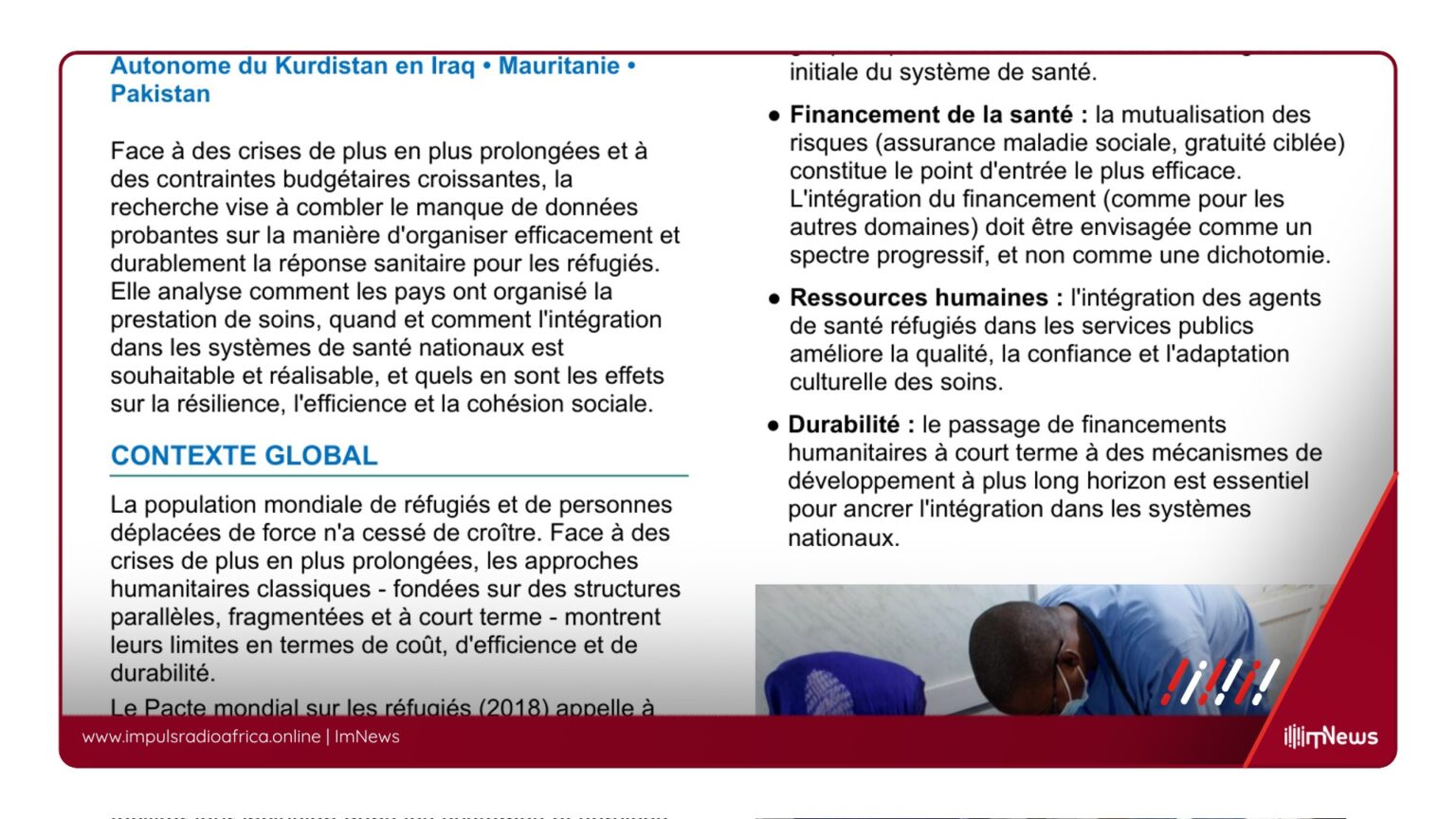
[Dateline: Nouakchott, Mauritania — April 15, 2026] The United Nations High Commissioner for Refugees (UNHCR) and the Institute for Global Health and Development at Queen Margaret University have joined forces to advance the health integration of refugees in Mauritania. This collaborative effort, which commenced in 2022, is part of a broader, three-year research initiative designed to bolster national health systems and improve the well-being of refugees in low and middle-income countries.
The research, currently underway in six countries including Mauritania, focuses on the integration of refugees into national health systems, analyzing the complexities of such integration and developing effective strategies to overcome these challenges. Mauritania, which has provided refuge to over 160,000 Malian refugees and asylum-seekers, has become a key focal point for this study.
The research findings aim to enhance the resilience and efficiency of health systems, as well as foster social cohesion.
In Mauritania, the establishment of migrant health centers is a cornerstone of the initiative, providing primary healthcare services and facilitating the seamless transition of refugees into the national health system. These centers are envisioned as bridges between humanitarian assistance and sustainable national health services.
The program’s approach underscores the importance of including refugees in national health plans and policies. It also emphasizes the necessity of ongoing support and resources to ensure the long-term sustainability of integrated health services for refugees.
The research report, available in French, highlights the critical role of these services in improving health outcomes for both refugees and the host communities.
As the program progresses, it is anticipated that the research findings will offer valuable insights into the best practices for refugee health integration.
The ultimate goal is to bolster the health and well — being of refugees while fortifying the resilience of host countries’health systems. This partnership between the UNHCR and Queen Margaret University represents a significant step towards addressing the health needs of refugees globally.
As the initiative continues, it will be crucial to monitor its impact and ensure that the findings are effectively implemented to make a meaningful difference in the lives of refugees worldwide.
*Additional reporting by ImNews | Sources consulted: 5*
—
By This original article was produced by the ImNews editorial team
Source: reliefweb
Source: UN High Commissioner for Refugees