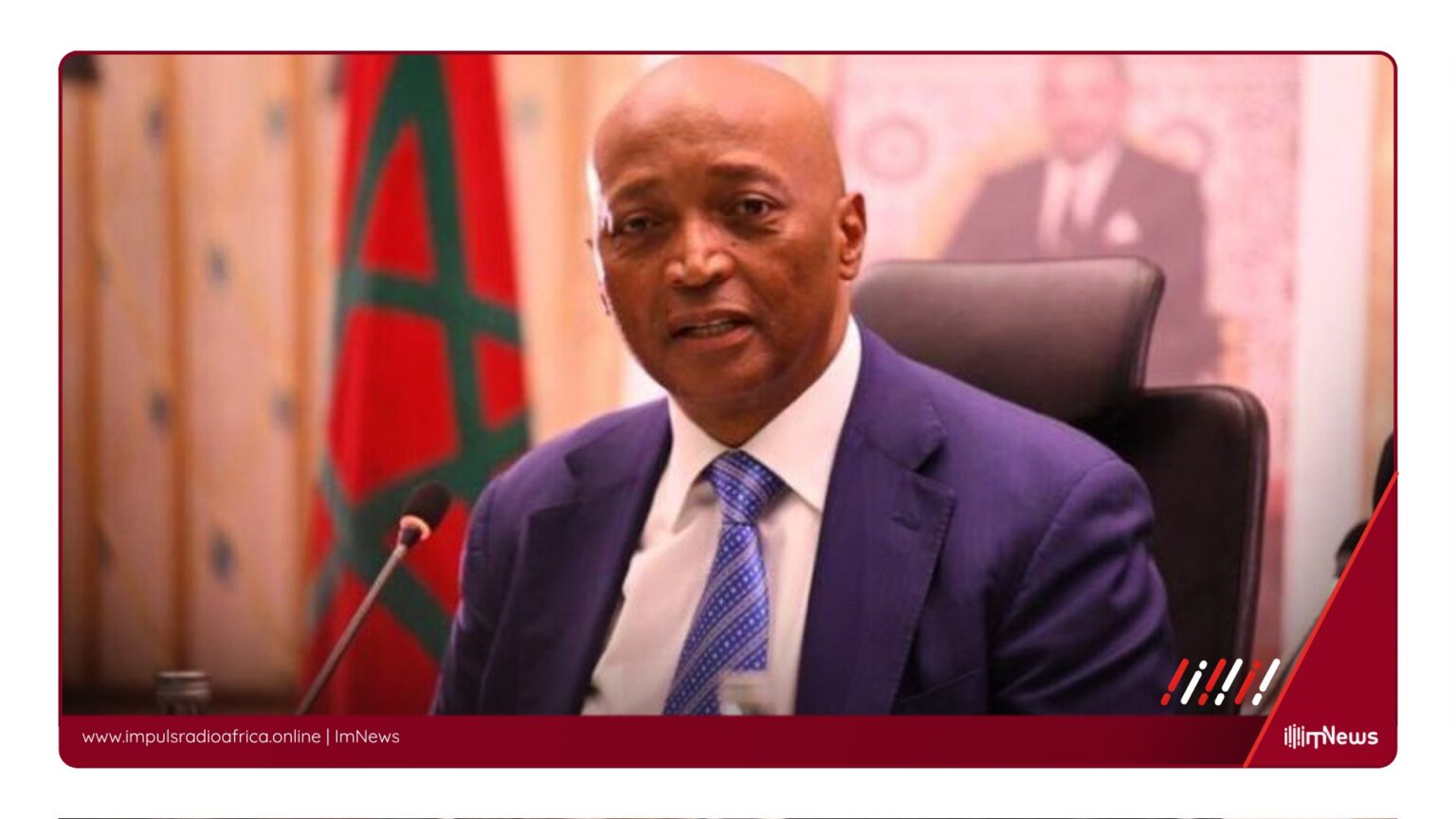
In a significant acknowledgment of Morocco’s contribution to the financial turnaround of the Confederation of African Football (CAF), its president, Patrice Motsepe, has hailed the North African nation’s pivotal role in transforming the confederation’s finances. Motsepe attributed CAF’s shift from a substantial deficit to a surplus, stating, “CAF had a deficit estimated at $100 million, but now it has a surplus thanks to Morocco.”This achievement marks one of the most substantial financial recoveries in the modern history of CAF, underscoring Morocco’s expanding influence within African football.
When Motsepe assumed the presidency of CAF in 2021, the organization was addressing a severe financial crisis, with an estimated deficit ranging between $100 million and $140 million. His primary goal was to stabilize the confederation’s financial position, a strategy that has now proven effective. At the CAF General Assembly in October 2025, the confederation reported its first profitability in eight years, with a net profit of $9.
48 million for the 2023-2024 period. This is expected to grow further, with a projected surplus of $28. 46 million for the 2025-2026 period.
A major factor in this recovery has been the success of football tournaments hosted in Morocco, with particular emphasis on the 2025 Africa Cup of Nations (AFCON), which is projected to generate a net profit of $113.8 million for CAF. Morocco’s reputation as a reliable host for major tournaments, coupled with substantial investments in stadiums, sports infrastructure, logistics, and event organization, has made it a preferred destination for continental competitions.
Motsepe has repeatedly highlighted Morocco’s unwavering commitment to hosting tournaments, including less commercially attractive events such as women’s football and futsal competitions. This reliability has been instrumental in maintaining continuity in CAF’s calendar while maximizing commercial returns. Morocco’s hosting model has also significantly bolstered CAF’s revenue streams, including ticket sales, sponsorships, media rights, and commercial partnerships. For the 2025 AFCON alone, CAF secured 23 commercial partners.
The improved financial position of CAF is already evident in the increased prize money for major competitions, such as the 2025 AFCON in Morocco, which awarded the winner a prize of $10 million, a substantial increase from previous editions. Similarly, the prize for the CAF Champions League winner has now risen to $6 million. Beyond its on-field prowess, Morocco’s role in African football has become a major economic driver, as evidenced by the substantial revenue generated from the AFCON, which covered 80% of the costs associated with hosting the 2030 FIFA World Cup.
Motsepe’s comments reflect the growing importance of Morocco not only within African football but also on the continent’s sports scene at large.
Source: moroccoworldnews
Original author: Farah Ben Gamra