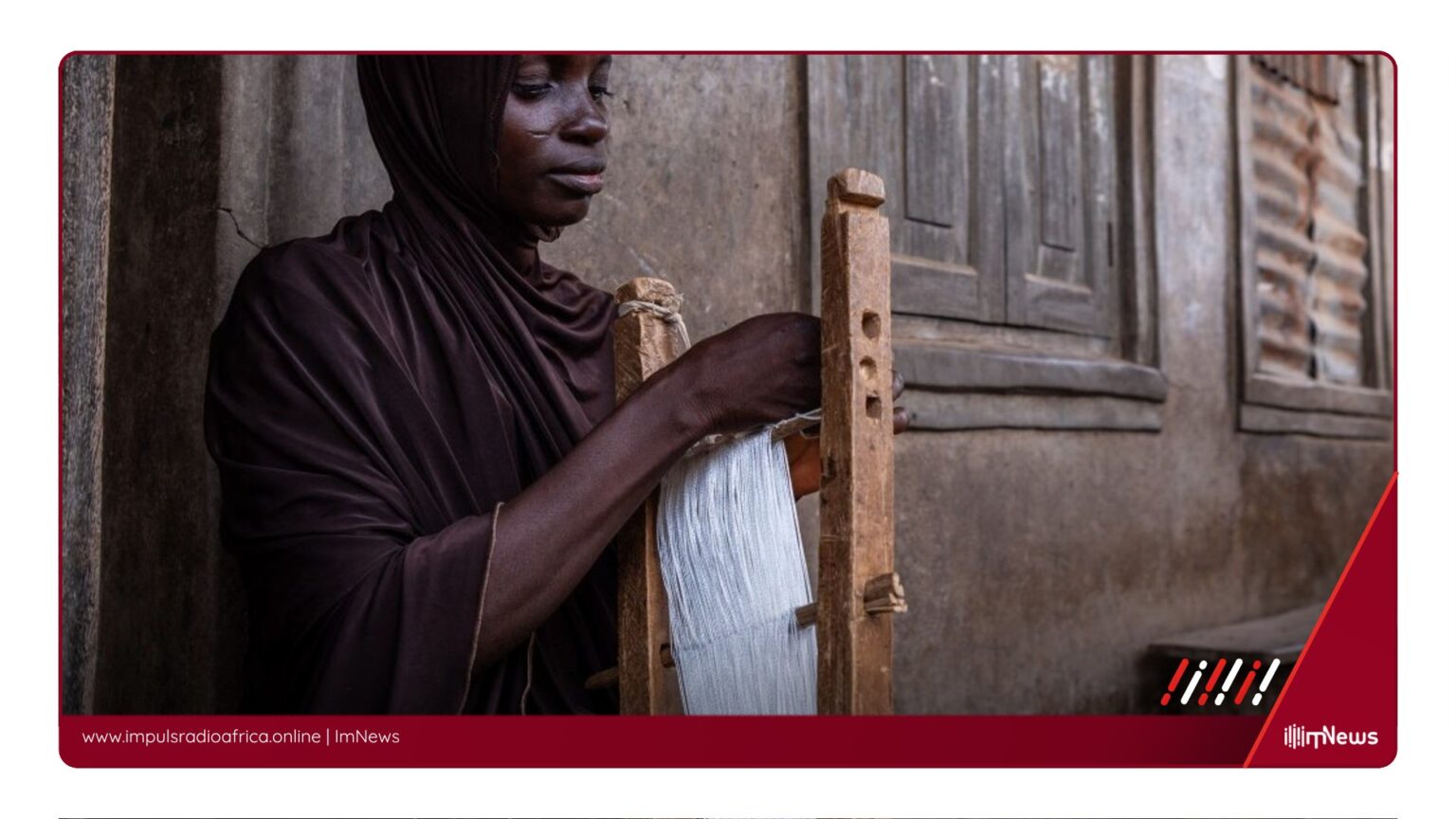
Iseyin, a tranquil town nestled in southwestern Nigeria, harbors a rich tapestry of tradition and culture. It is here, beneath the protective shade of ancient trees and in the makeshift shelters that line narrow alleys, that the art of aso-oke is meticulously crafted. This handwoven fabric, deeply rooted in the Yoruba heritage, has seen a remarkable rise in demand, both domestically and internationally, thanks in part to the influence of the Nigerian diaspora and the global appreciation for the nation’s vibrant fashion and music scenes.
Despite the allure of mechanization and the financial incentives it might offer, the artisans of Iseyin remain steadfast in their commitment to the traditional handweaving process. Their belief is that it is this very hands-on approach that imbues aso-oke with its distinctive character and cultural significance. The town, situated about 200 kilometers from Lagos, the heart of Nigeria’s cultural and fashion scene, is recognized as the birthplace of aso-oke.
The air is filled with the rhythmic sound of wooden looms under the scorching sun of a muggy morning. Yards of yarn and freshly woven fabrics are spread across dusty ground, surrounded by the weathered sheds where weavers toil with unwavering dedication. This craft has become more than just a livelihood; it has become a cultural cornerstone, drawing young people, including university graduates, to Iseyin to learn the ancient tradition.
Waliu Fransisco, a 34-year-old artisan with bare-chested tattooed biceps, stands before his wooden loom. The rhythmic click-clack of the loom echoes through the air as he weaves a cream-and-blue fabric. Ten years ago, Fransisco abandoned his career as a Lagos nightclub singer to become a master weaver of aso-oke. “Now I earn a decent living from weaving aso-oke and I’m satisfied, “he told AFP with a sense of accomplishment.
Aso — oke, which translates to “the cloth from up country, “is a thick, multicolored fabric that is integral to Nigeria’s fashion identity. It is not only a staple in traditional ceremonial attire but also a statement piece in contemporary fashion, as seen when Meghan Markle adorned an aso-oke wrapper and shawl during her visit to Nigeria with Prince Harry. In Iseyin, the steady rhythm of the wooden looms is the soundtrack to a tradition that spans generations, serving as both a cultural emblem and a marker of identity.
Historically, aso — oke production involved the meticulous preparation of threads from cotton or silk, cleaned, spun, and dyed using traditional methods before being set on looms. Today, while artisans still use traditional techniques, they increasingly incorporate loom-ready threads in a variety of colors, many of which are imported from China. Abdulhammed Ajasa, a 42-year-old weaver, explains, “This is what Iseyin is known for. We inherited it from our forefathers.”.
Source: aljazeera
Original author: AFP