Lagos, Nigeria — A mounting food security crisis is sweeping northern Nigeria, driven by a confluence of factors including prolonged conflict and soaring input costs.
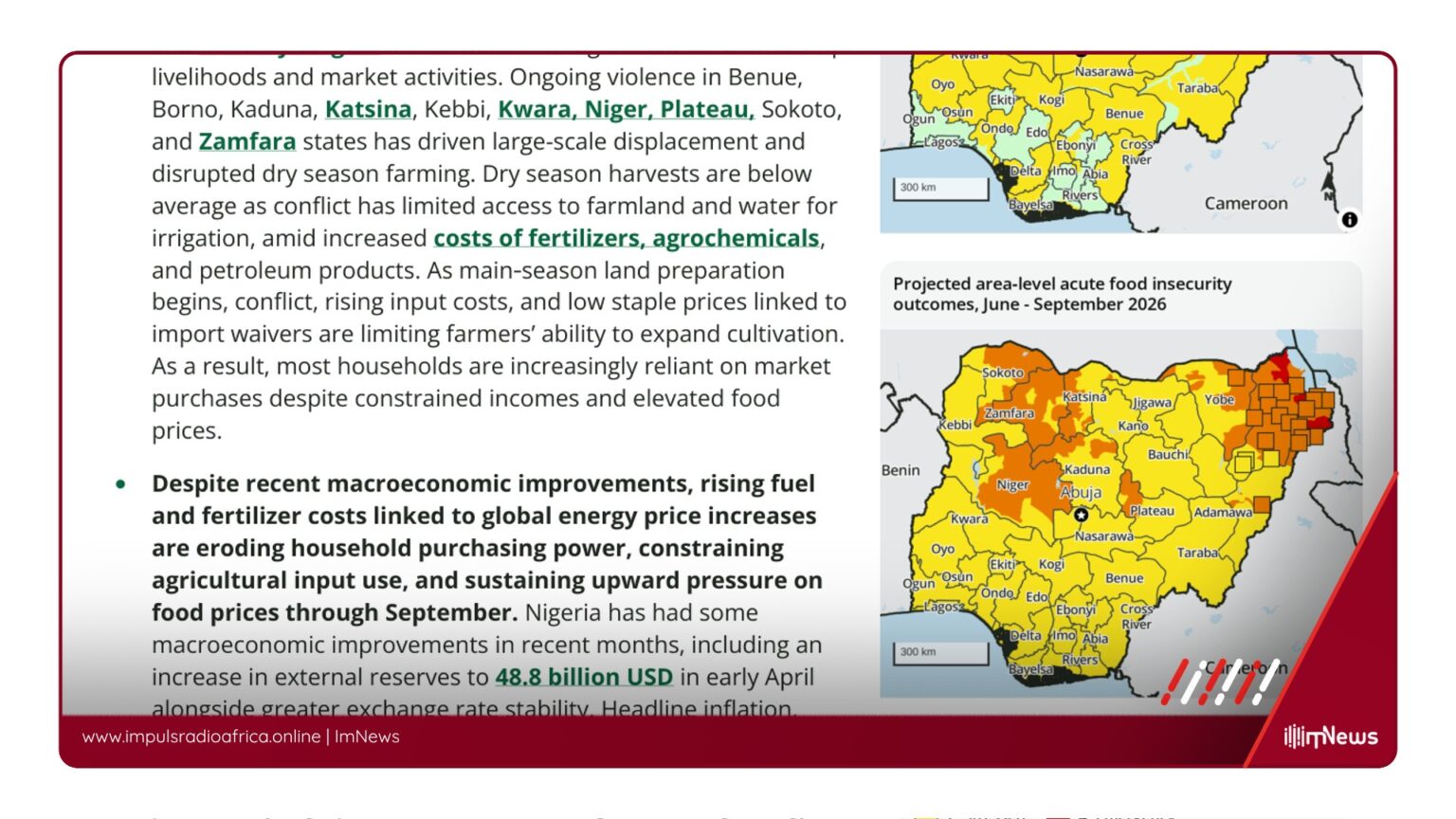
According to the Famine Early Warning System Network (FEWS NET), this critical situation is expected to reach Crisis (IPC Phase 3) by September 2026, with an ominous threat of Emergency (IPC Phase 4) outcomes in areas of the North East that remain inaccessible. Insecurity has exacerbated displacement across the region, severely disrupting livelihoods and market activities.
The ongoing violence in Benue, Borno, Kaduna, Katsina, Kebbi, Kwara, Niger, Plateau, Sokoto, and Zamfara states has resulted in below — average dry season harvests, with access to farmland and irrigation water significantly hampered. This has been further compounded by the sharp increase in the cost of fertilizers, agrochemicals, and petroleum products, which has made cultivation unaffordable for many farmers.
As the preparation for the main — season land begins, the combination of conflict, escalating input costs, and low staple prices tied to import waivers are restricting farmers’ capacity to expand their cultivation efforts. Most households are consequently forced to rely on market purchases, even with their constrained incomes and elevated food prices. Macroeconomic improvements in Nigeria, including the rise in external reserves and exchange rate stability, are overshadowed by rising fuel and fertilizer costs linked to global energy price hikes.
This has diminished household purchasing power and continues to exert upward pressure on food prices. FEWS NET’s report provides an update to the food security outlook from February 2026 to September 2026, based on information available as of April 30, 2026. It underscores the urgent need for both immediate relief measures and long-term solutions to address the root causes of the crisis.
The Nigerian government and international organizations are addressing the crisis, but comprehensive strategies are yet to be fully outlined.
The plight of displaced populations is dire, and they urgently require support in the form of food assistance and livelihood opportunities.
As northern Nigeria grapples with the specter of food insecurity, it is imperative that the crisis be addressed not just as a Nigerian problem but as a Pan — African issue, demanding a coordinated international response. ImNews will continue to monitor and report on this developing situation, as the world watches and waits for the necessary measures to stabilize food security in this affected region.
*Additional reporting by ImNews | Sources consulted: 5*
—
This original article was produced by the ImNews editorial team
Source: reliefweb
Source: Famine Early Warning System Network