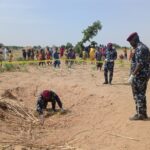
The relentless heavy rainfall has led to 112 confirmed deaths, widespread property damage, and the closure of major roads in the capital, Nairobi. This natural disaster has not only disrupted daily life but has also highlighted the need for improved infrastructure and emergency response systems.
The World Health Organization (WHO) has taken a proactive approach to the crisis, establishing an emergency health hub in Kenya.
This hub, in partnership with the Kenyan government, aims to improve preparedness for public health crises and train emergency responders.
According to the WHO, the hub will also house a Centre of Excellence for the Health Emergency Workforce, responsible for training 3,000 responders capable of reacting to public health emergencies within 24 hours. Kenya’s recent flooding follows a history of natural disasters, including droughts and floods.
The country’s vulnerability to heavy rains and flooding, particularly during the rainy season, has been a persistent concern.
The Dadaab refugee complex in Garissa County, with its large population, poses significant challenges for health services amidst the current crisis.
The flooding has also underscored the need for robust infrastructure in urban areas and low — lying regions.
The disruption to transport and infrastructure in Nairobi, including the closure of major roads and power outages in several neighborhoods, underscores the urgency for improvements.
The WHO’s emphasis on health security and the establishment of the emergency health hub is a testament to the organization’s commitment to managing public health crises effectively.
The hub’s strategic location in Kenya signifies a regional approach to health emergencies, which is crucial given the country’s history of natural disasters.
As the country grapples with the aftermath of the flooding, the WHO’s intervention is a positive step towards building a more resilient health system.
However, the broader challenges of infrastructure and emergency response systems require sustained efforts from both the public and private sectors.
The Kenyan government’s collaboration with international organizations like the WHO is commendable, but it also underscores the need for long-term planning to mitigate the impact of future natural disasters.
Strengthening infrastructure, improving emergency response systems, and enhancing public health surveillance and disease monitoring are key areas that require attention.
As the situation unfolds, the focus must be on both immediate relief efforts and long — term solutions.
The establishment of the emergency health hub is a step in the right direction, but it is just one piece of a much larger puzzle.
Kenya’s ability to manage future crises will depend on its commitment to these long-term goals.
The flooding crisis has served as a stark reminder of the vulnerabilities faced by the country.
However, it has also provided an opportunity for positive change, particularly in the realms of public health and infrastructure.
As Kenya moves forward, the proactive approach taken by the WHO and the Kenyan government offers hope for a more resilient future.
*Additional reporting by ImNews | Sources consulted: 5*
—
This original article was produced by the ImNews editorial team
Source: Africa Health