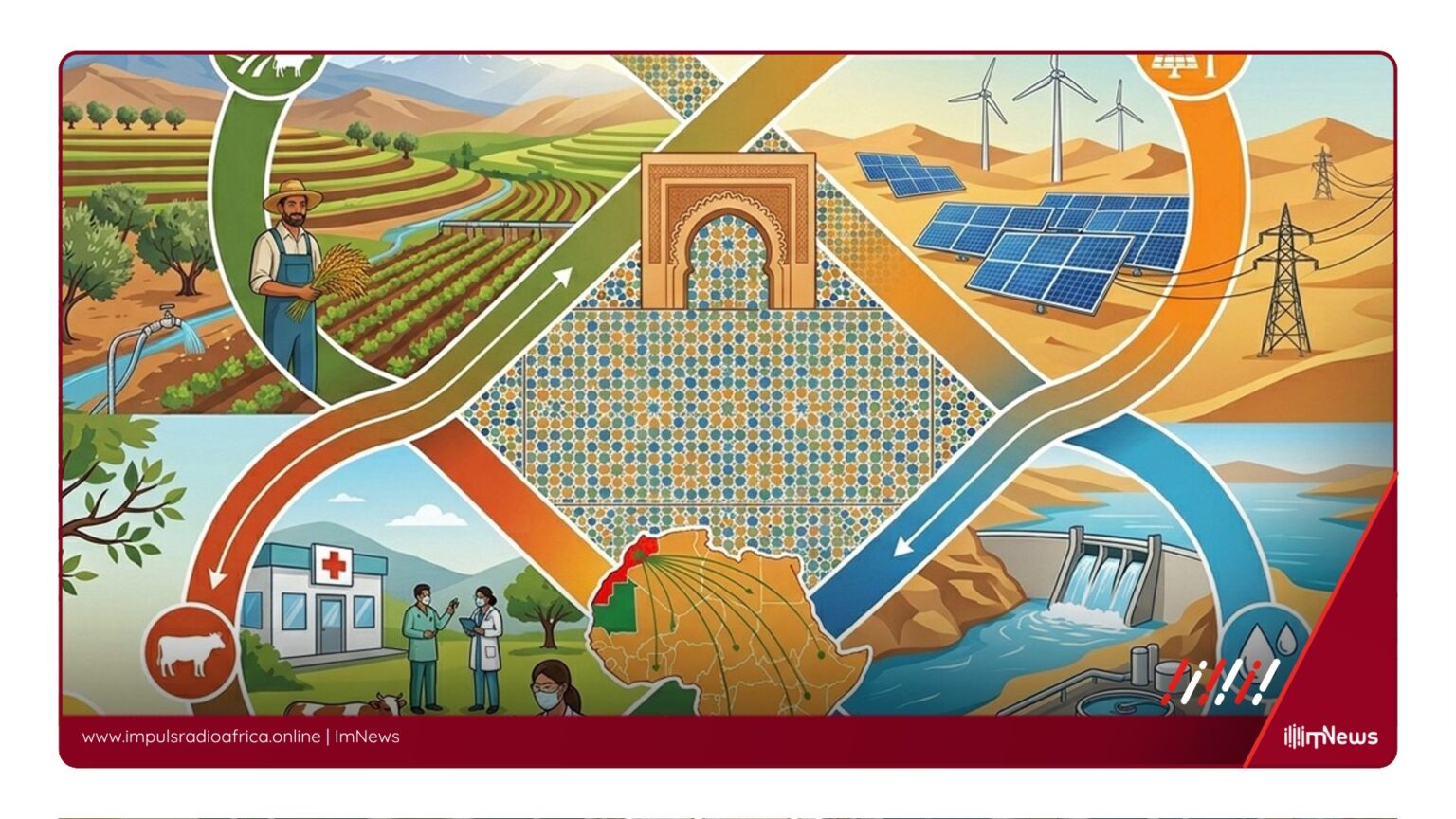
Rabat, Morocco — Morocco is forging a trailblazing path in resource management by addressing the intricate web of food, energy, water, and health challenges through its innovative Nexus Approach, positioning itself as a model for sustainable development across Africa.
The Nexus Approach, which underscores the interconnectedness of food systems with water and energy resources, is reshaping international policy discussions. Morocco’s proactive adoption of this strategy underscores its dedication to mitigating resource insecurity and public health risks. This holistic strategy, designed to tackle food insecurity, energy vulnerability, water scarcity, and public health concerns simultaneously, is not just critical for Morocco’s stability but also serves as a beacon for other African nations addressing comparable challenges.
The Moroccan government’s commitment to the Nexus Approach is exemplified by initiatives such as the National Program of Water Savings in Irrigation, which seeks to modernize irrigation across over 550,000 hectares.
The Green Morocco Plan has significantly expanded drip irrigation, reflecting the nation’s push towards water-efficient agriculture.
The Generation Green 2020-2030 strategy further underscores Morocco’s dedication to a more resilient and eco-efficient agricultural sector, aiming to double water efficiency. While Morocco’s efforts have garnered international attention, specific statistics, like the 72% reduction in water consumption and the 673 million cubic meters saved through water conservation projects, underscore the tangible impact of the strategy.
The nation has also seen a marked increase in food security, a testament to the effectiveness of its integrated approach.
However, while progress has been made, the challenges are substantial. Access to safe drinking water remains a concern for 6. 5% of the population, and food insecurity looms over 45.
5%.
The journey towards resource resilience requires ongoing commitment and collaboration. Morocco’s Nexus Approach, therefore, stands as a beacon for regional and global sustainability efforts, emphasizing the importance of equitable distribution of benefits and regional blueprinting for future sustainability endeavors.
As the nation continues to lead by example, Africa and the world watch closely for the outcomes of this transformative approach.
*Additional reporting by ImNews | Sources consulted: 3*
—
This original article was produced by the ImNews editorial team
Source: moroccoworldnews
Source: El Mehdi Kail