Russian — linked consultants have been working to bolster and expand a pro-Moscow alliance in the Sahel region, employing media campaigns, political pressure, and cultural events to sway governments and public opinion, according to leaked internal documents obtained by RFI and its partners. The documents are part of the “Propaganda Machine “investigation, a collaborative effort by pan-African media organisation The Continent and journalism network Forbidden Stories, of which RFI is a member. The investigation is based on over 1,400 pages of internal records from Africa Politology, a group founded by Yevgeny Prigozhin, the founder of the Russian paramilitary group Wagner. Africa Politology was later taken over by Russian foreign intelligence services following the disbandment of the Wagner Group and Prigozhin’s death in 2023.
The documents reveal how the group aimed to reinforce the Alliance of Sahel States (AES) between Mali, Burkina Faso, and Niger and extend the alliance to neighboring countries, promoting Russian interests across the region. The group also outlined a broader strategy to diminish Western influence, secure new economic opportunities, and garner support at the United Nations. The Sahel is identified as a key focus of Russia’s return to Africa, alongside the Central African Republic, where Russia provides security support, accesses natural resources, and promotes anti-Western messages.
Strategists from Africa Politology, in an August 2023 report titled “Global South, “advocated for a “confederation of independence “to counter what they described as a Western-built “belt of instability.”This vision coincided with the emergence of the AES. Military coups in Mali, Burkina Faso, and Niger, followed by the withdrawal of French troops from counter-terrorism operations, facilitated closer ties with Moscow. The documents depict this as a narrative of sovereignty, portraying jihadist groups, political opposition, and critical civil society as internal threats backed by Western powers and their regional allies.
The objectives outlined in the files align closely with Russia’s interests, including undermining the West’s image as a reliable security partner and disrupting US military logistics across Africa. They also aim to open new markets for hydrocarbons, weapons, and agricultural products, and to secure diplomatic support. Internal budgets reveal spending on communication campaigns, including $51,300 in Niger in May 2024 and $64,500 in September.
Africa Politology consultants claimed credit for political developments, including the creation of the AES. A large information campaign was launched in the media and on social networks, leading to the leaders of Mali, Burkina Faso, and Niger signing a memorandum creating the Confederation of Sahel States at a summit in July 2024. In Niger, the documents describe efforts to strengthen the military government and sever ties with the United States in 2024, with consultants acknowledging a role in disrupting contacts with Washington.
Cultural and social initiatives were also used to build influence, such as opening a Russian cultural center in Niamey in June 2024 and organizing a motorbike rally with over 300 participants for “Russia Day.”The documents also describe efforts to push Niger out of the CFA franc and promote a unified banking system across AES countries.
The Africa Politology group claimed to have supported Mali’s role as the “driving force of the anti-Western movement in the Sahel.”A work plan for May and June 2024 included an objective to “block the work of religious figures whose actions aim to weaken the established order.”The Coordination of Movements, Associations, and Supporters (CMAS), a movement linked to influential imam Mahmoud Dicko, was dissolved in March 2024, following his exile.
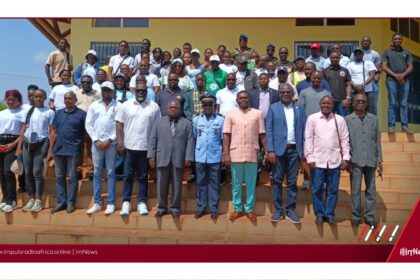
The leaked documents also highlight a youth forum held in Bamako in September 2024 to mark the first anniversary of the Liptako-Gourma Charter, the mutual defense pact that preceded the confederation. Participants later learned their travel had been funded by the Russian House in Bamako, and reported the presence of two men conducting interviews, Maksim Kovaliev and Nikolay Laktionov, identified in the documents as Africa Politology employees.
The Africa Politology documents also detail a $3,000 campaign against Ukraine, described as “a country supporting terrorists in Africa.”The campaign coincided with Mali cutting ties with Kyiv on August 4, 2024, after comments by a Ukrainian military intelligence spokesman suggesting Ukraine had shared information with northern Mali rebels involved in an attack near Tinzaouatène the previous week.
Expanding the AES was a central objective, with Chad identified as the main priority and several other countries also targeted. The documents mention efforts to influence Senegal’s leaders, President Bassirou Diomaye Faye and Prime Minister Ousmane Sonko, with campaigns pushing for closer ties with the AES, the departure of French troops, and the expulsion of the Ukrainian ambassador.
Togo was identified as another key target, particularly its port of Lomé, described in the documents as a vital logistics hub. They say 35 campaigns were carried out between February and April 2024 to influence the country’s geopolitical direction. The campaigns coincided with legislative elections held in a tense climate, alongside constitutional changes allowing Faure Gnassingbé to remain in power as president of the Council of Ministers.
Despite the scale of the operations described, their real impact remains unclear. “These documents are full of bold claims about their achievements, “said Lou Osborne of All Eyes On Wagner, a partner in the investigative consortium. “They do not show a deep understanding of local dynamics, and sometimes the same strategies are applied across different countries without adapting to local realities, “she added. The documents also suggest that promotion of Russia as a security partner may be weakening, as the US increases its engagement in the region.