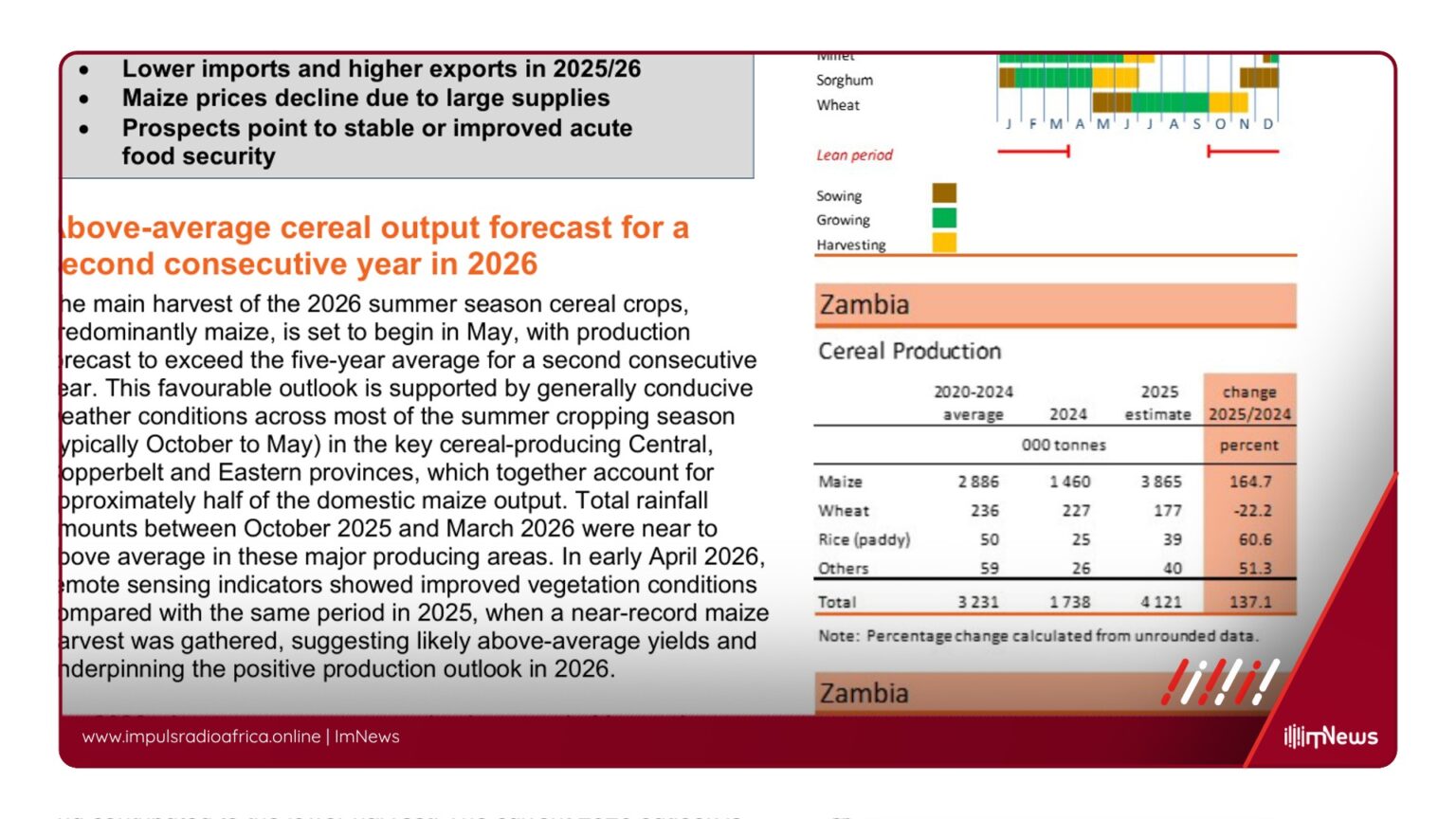
Zambia’s Agricultural Resilience: Above-Average Cereal Output Predicted for 2026 BODY: Lusaka, Zambia – The Food and Agriculture Organization of the United Nations (FAO) has projected a second consecutive year of above-average cereal output in Zambia, particularly for maize, starting in May 2026. This favorable outlook is attributed to favorable weather conditions and near-to-above-average rainfall across key cereal-producing regions, including the Central, Copperbelt, and Eastern provinces.
The anticipated harvest is expected to exceed the five — year average, bolstered by improved soil moisture conditions and a more stable electricity supply, which has facilitated irrigation use for wheat production. This follows a strong rebound in production in 2025, leading to a sharp decline in cereal import requirements and a return to net maize exporter status for Zambia. Maize prices have seen a 25% decline year-on-year, driven by ample domestic supplies and currency appreciation.
However, this has posed challenges for farmers, particularly those reliant on maize sales.
Additionally, rising energy costs could impact retail food prices, as they are passed on through the supply chain.
The number of people facing acute food insecurity has decreased significantly, from 5. 6 million in 2024/25 to 1. 7 million between October 2025 and March 2026.
This reduction is attributed to increased food availability due to higher production.
However, the situation remains precarious, and higher energy costs could moderate improvements in food access. Looking ahead, Zambia’s agricultural sector is expected to remain stable and could even improve, supported by the anticipated above-average harvest in 2026.
The country’s return to being a net maize exporter and the removal of trade restrictions are expected to positively impact the economy, providing opportunities for increased revenue and job creation.
*Additional reporting by ImNews | Sources consulted: 5*
—
This original article was produced by the ImNews editorial team
Source: reliefweb
Source: Food and Agriculture Organization of the United Nations