Central African Republic: Fragile Transition Amidst Humanitarian and Security Challenges. Khartoum, Sudan – The Central African Republic (CAR) finds itself in a precarious transition phase following the December 2025 general elections, with President Faustin-Archange Touadéra’s re-election signaling a semblance of stability amidst ongoing challenges.
The security situation in CAR remains a significant concern.
While some areas have seen improvements, the presence of insecurity around mining sites, transhumance corridors, and borders with Sudan and South Sudan continues to pose a threat. This has been compounded by the presence of foreign armed groups, exacerbating the instability within the country.
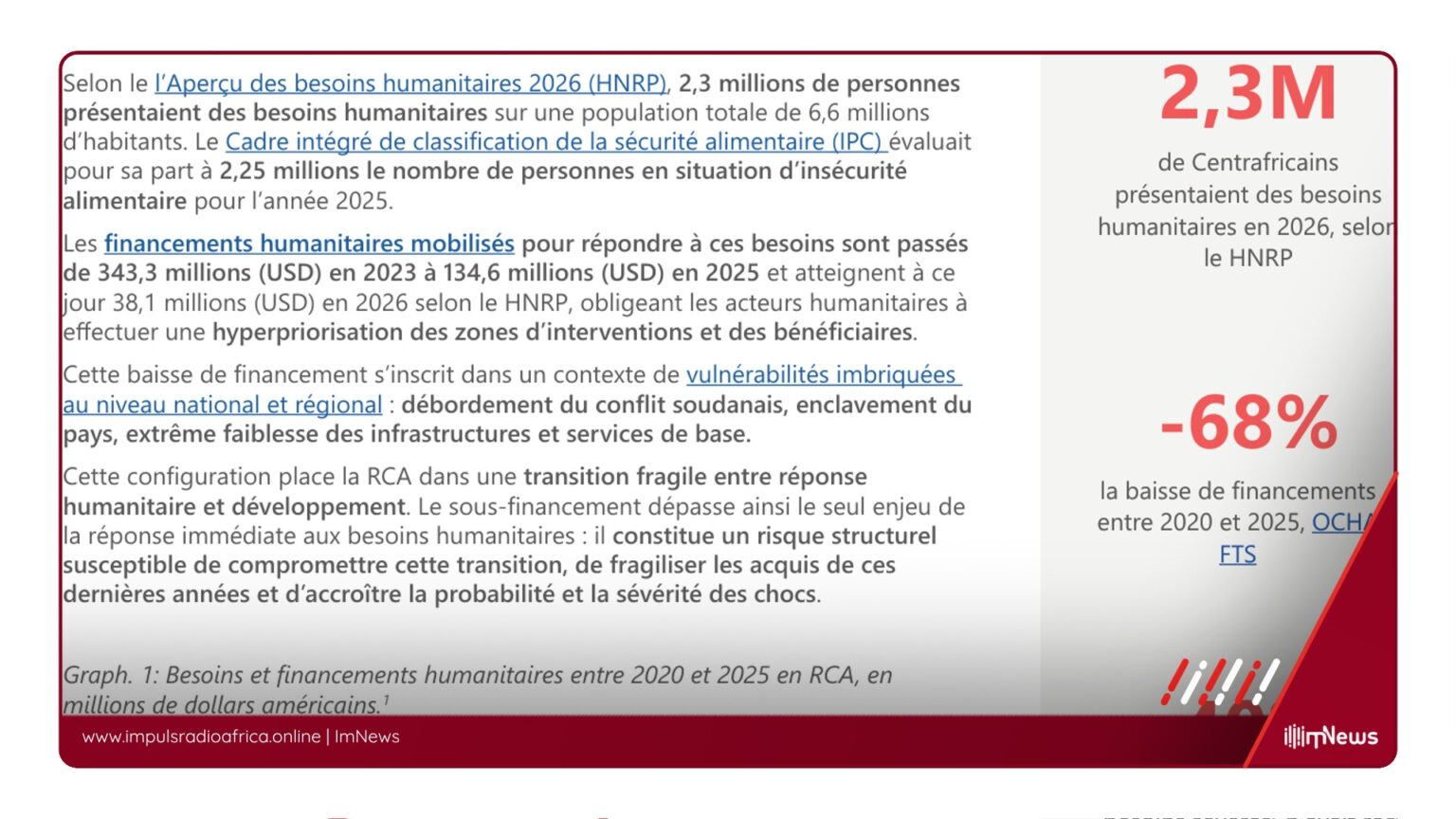
The humanitarian crisis in CAR is acute, with approximately 2.
3 million people requiring humanitarian assistance and 2. 25 million facing severe food insecurity.
The African Union (AU) and the United Nations (UN) have emphasized the urgency of providing humanitarian aid and debt relief to the struggling nation.
The UN mission MINUSCA has played a pivotal role in supporting the elections and peacekeeping efforts in CAR.
However, the ongoing challenges highlight the need for a sustained international presence and support to ensure the stability and security of the region.
The AU and the UN have highlighted the fragility of the ongoing transition, emphasizing the importance of international support for humanitarian assistance and debt relief.
Despite the relative calm in certain areas, security remains a significant challenge, particularly in rural areas and border regions. Opposition groups, such as the Bloc Républicain (BRDC), have expressed concerns about the fairness and credibility of the electoral process, adding another layer of complexity to the transition phase.
The need for transparent and inclusive processes is crucial to the stability and legitimacy of the government.
The CAR Country Report 2026 by the Bertelsmann Transformation Index (BTI) indicates that while President Touadéra has strengthened control over most of the territory, much of which was previously occupied by armed groups, the security situation remains precarious.
The presence of ex — Wagner troops has allowed the armed forces to be deployed in almost all provincial cities and rural areas, particularly those near mines and other natural resources.
The humanitarian crisis in CAR is further compounded by the limited resources available for aid efforts.
The Humanitarian Needs Overview 2026 (HNO) reports that the financial resources mobilized to address the needs of 2. 3 million people have decreased significantly, raising concerns about the ability of humanitarian actors to provide adequate assistance.
The situation in CAR underscores the importance of international cooperation and support.
The AU and the UN continue to advocate for urgent humanitarian aid and debt relief, while MINUSCA provides crucial support for elections and peacekeeping efforts.
As CAR navigates this fragile transition phase, the need for a comprehensive and coordinated approach to security, humanitarian, and governance challenges is paramount.
The international community must remain vigilant and committed to supporting the Central African Republic in its journey towards stability and prosperity.
*Additional reporting by ImNews | Sources consulted: 5*
—
This original article was produced by the ImNews editorial team
Source: reliefweb
Source: REACH Initiative