Bangui, Central African Republic — The Central African Republic (CAR) is addressing an escalating humanitarian crisis, as a severe storm in Bouca and Ourongou has further compromised the lives of vulnerable populations.
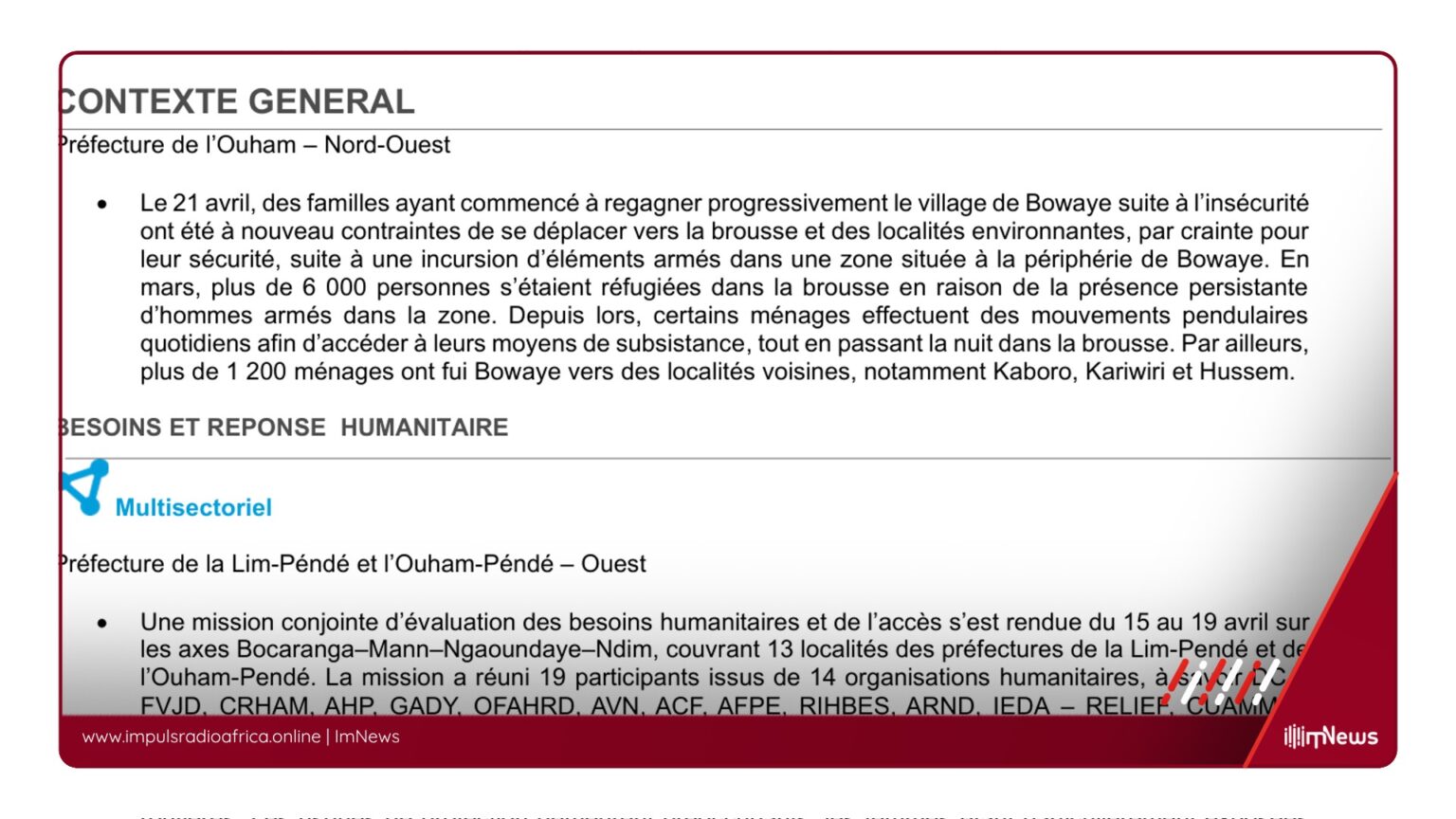
According to the UN Office for the Coordination of Humanitarian Affairs (OCHA), 200 households have received emergency shelters and non-food items following the storm. Situation Overview: In the Ouham-Pendé region, families that had begun to return to their homes in Bowaye after a period of insecurity were forced to flee once more due to fears of armed elements. Over 6,000 people sought refuge in the bush in March due to the persistent presence of armed men in the area.
Furthermore, more than 1,200 households have moved to neighboring villages such as Kaboro, Kariwiri, and Hussem. Humanitarian Response: A joint humanitarian assessment mission was conducted between 15 and 19 April, covering 13 localities in the Lim-Pendé and Ouham-Pendé prefectures.
The mission, involving 14 humanitarian organizations, found that communities face high risks of food insecurity due to crop destruction by livestock, delayed agricultural schedules, and limited market access caused by road infrastructure degradation. Women are particularly at risk of gender-based violence, including early and forced marriages, which hinder their access to agricultural areas.
The assessment also revealed that access to clean water remains severely limited, with approximately 80% of wells out of service and inadequate latrine coverage, increasing public health risks. Health services are restricted, particularly in Bezéré, Ndim, and Ngaoundaye, leading to maternal mortality cases and a heightened risk of epidemic outbreaks. Supporting Efforts: The Programme national de relèvement des moyens de subsistance (PNRM) has initiated activities to assist 150 young people, including 75 women and girls, in Zangba.
These efforts involve the rehabilitation of rural tracks and the construction of two school sheds, promoting socio — economic reintegration and autonomy among the youth. These young individuals returned to their homes following conflicts in 2024 and are part of the most vulnerable populations in the area.
The Central African Republic’s humanitarian situation continues to deteriorate, with the recent storm exacerbating the plight of already vulnerable populations. Immediate and sustained humanitarian support is crucial to alleviate suffering and provide the necessary infrastructure for long-term stability and development in the region.
*Additional reporting by ImNews | Sources consulted: 5*
—
This original article was produced by the ImNews editorial team
Source: reliefweb
Source: UN Office for the Coordination of Humanitarian Affairs