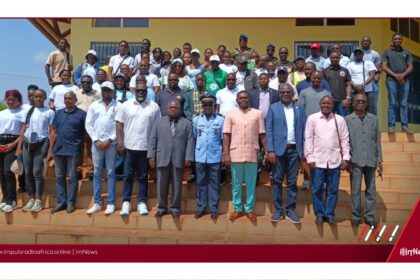
In a bid to foster sustainable reintegration and promote evidence — based solutions, the International Organization for Migration (IOM) has initiated a comprehensive data collection effort in Burundi’s Nyanza region. This initiative, set to take place in October 2025, aims to provide valuable insights for humanitarian actors, local authorities, and technical partners.
The data collection process will focus on two pilot hills, Mukerezi and Kazirabageni, where a representative sample of the returned, displaced, and host communities will be engaged. The sample size for each hill is determined by the Internal Displacement Persons (PDI) figures from the Displacement Tracking Matrix (DTM) assessment conducted in July 2025, as well as the number of returned populations provided by the Action of Return and Reintegration of Returnees (ARRR).
Interviews will be conducted with household heads, and in their absence, another adult member of the household over the age of 18 will be questioned. The data collection efforts are carried out with the consent of volunteers from the Burundi Red Cross, who have been trained in the DTM methodology and the use of data collection questionnaires on tablets.
The collected data encompasses demographic distribution of the targeted households and information on eight criteria for evaluating progress towards sustainable solutions, as outlined by the IASC (Inter-Agency Standing Committee). These criteria include safety and security, adequate standard of living, access to livelihoods and employment, restoration of housing, land, and property, access to personal documents, family reunion, participation in public affairs, and access to effective justice.
The data collected from the two hills covers 785 households, including 591 from the host community, 175 from the returned population, and 19 from internally displaced persons. The results are representative at the commune and population group levels, with a confidence level of 95 percent and a margin of error of 5 percent.
Furthermore, qualitative data have been gathered during group discussions with both men and women from the returned and host communities. This comprehensive approach ensures that the progress on each criterion is expressed in terms of average scores aggregated from the indicators corresponding to each criterion.
Source: reliefweb
Original author: International Organization for Migration