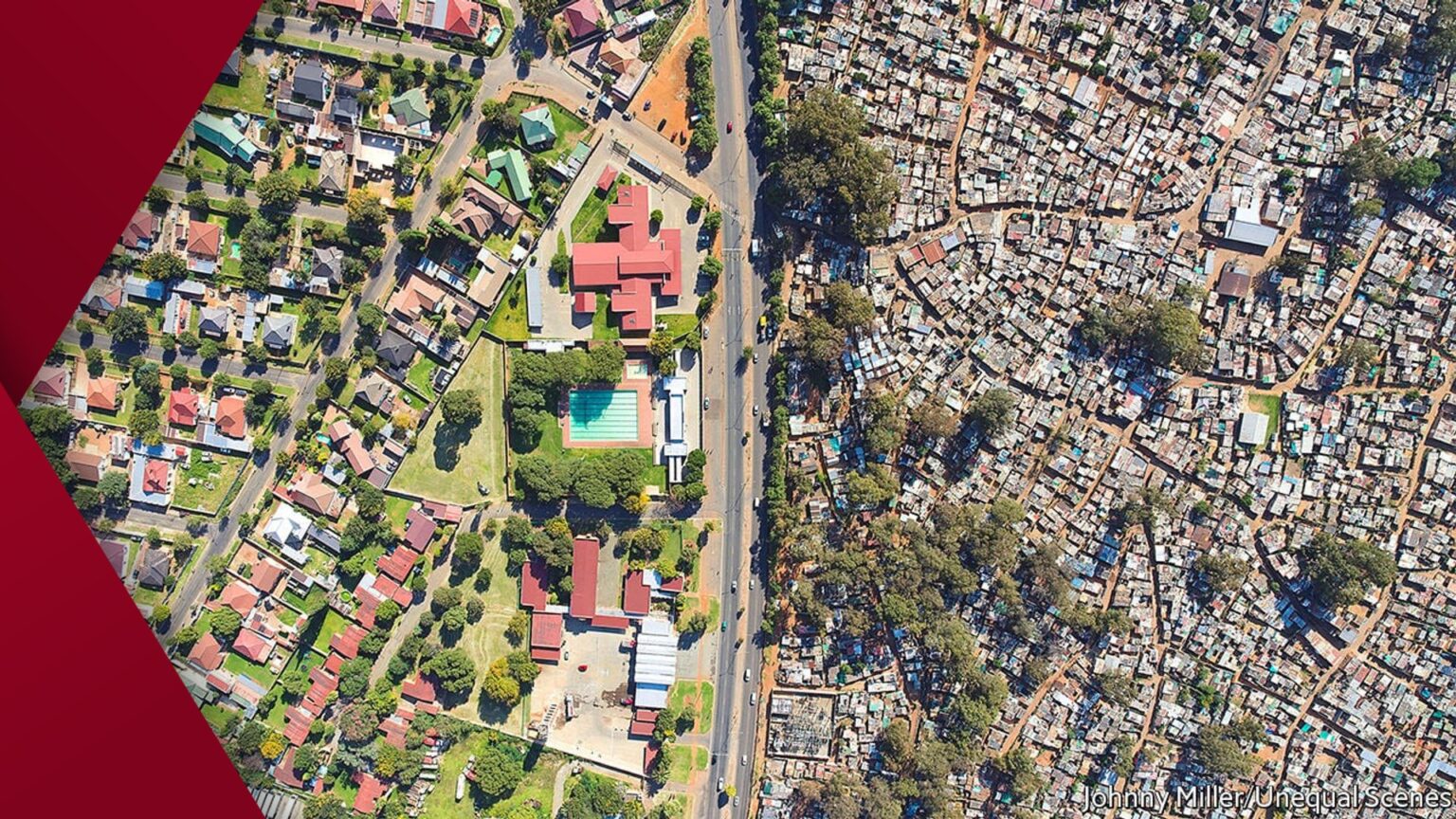
South Africa Tops Global List for Wealth Inequality. Johannesburg, South Africa — South Africa, the continent’s most affluent nation by GDP, has been identified as the most unequal country in the world, according to the latest ranking by the World Bank.
The report, which assessed the Gini coefficient, a measure of income inequality, places South Africa at the forefront of global inequality, highlighting a stark contrast between its economic prosperity and widespread poverty.
The World Bank’s report on inequality in Southern Africa notes that the region, encompassing countries like Botswana, Eswatini, Lesotho, Namibia, and South Africa, is the most unequal globally. South Africa and Namibia, in particular, exhibit higher levels of inequality than the rest of the region.
The Southern African Customs Union (SACU), of which South Africa is the largest member, shows consumption inequality over 40 percent higher than the averages for Sub-Saharan Africa and upper-middle-income countries.
Income inequality within South Africa has been on the rise, in contrast to the global trend of decreasing income inequality between countries. This trend is rooted in the country’s historical economic disparities, stemming from its apartheid past.
Although the mining and industrial sectors have been central to the country’s economy and contributed to significant wealth accumulation, they have also been major contributors to wealth inequality.
Efforts to address inequality since the end of apartheid in the 1990s have included various economic and social policies.
However, the challenge of reducing inequality remains, as highlighted by the World Bank and the United Nations, which emphasize the need for equal access to opportunity.
The South African government’s specific policies and interventions to tackle wealth inequality and their impact are among the unanswered questions.
The role of the country’s natural resource wealth in exacerbating or mitigating inequality is also a point of interest.
Additionally, the perception of South African citizens towards inequality and the measures taken by the government to address it remains unclear. Further details are expected as the situation continues to develop.
Source: World Bank Documents & Reports.
*Additional reporting by ImNews | Sources consulted: 5*