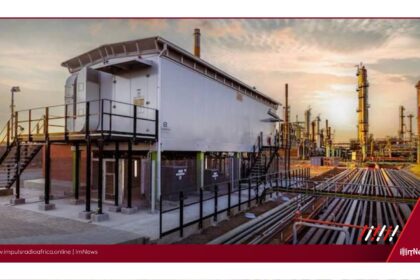
Nut Graf: The Cabinda Refinery, a $470 million investment, has started exporting fuel and supplying the domestic market, processing 30,000 barrels per day and meeting approximately 10% of Angola’s fuel demand.
The Cabinda Refinery, developed at a cost of over $470 million, is a significant milestone for Angola, which has long grappled with inadequate refining capacity.
The plant, which is primarily owned by Gemcorp Capital, is poised to revolutionize the nation’s energy landscape by meeting a substantial portion of its internal fuel demand.
The facility’s launch coincides with the expansion of Nigeria’s Dangote Refinery, which has recently reached full refining capacity, further solidifying Africa’s position as a key player in the global oil market. Angola’s state oil company, Sonangol, also operates a refinery in Luanda and is developing additional projects, including a 200,000 bpd refinery in Lobito and a 100,000 bpd refinery in Soyo, to address the continent’s refining deficit. Gemcorp, which took over the Cabinda Refinery six years ago, plans to double its capacity to 60,000 bpd in a second phase, expected to cost about $700 million.
This expansion will include a hydrocracking unit to produce diesel and jet fuel, enhancing the facility’s role in the global oil market.
The launch of the Cabinda Refinery is part of a broader push in Africa to reduce import dependence and retain value within the continent. Africa continues to export around three-quarters of its crude oil while importing nearly 70% of refined petroleum products, a structural imbalance that costs the continent an estimated $50 billion annually.
As Angola positions itself more strongly in regional fuel supply chains, the Cabinda Refinery’s success will be a testament to the continent’s growing importance in the global oil sector.
However, it also raises environmental and social concerns that require careful consideration and management. Kicker: The government is reassessing other downstream projects, including the proposed 100,000 bpd Soyo refinery, which is currently under review following challenges with its U. S.
-led private developer, Quanten Consortium.
*Additional reporting by ImNews | Sources consulted: 5*
—
This original article was produced by the ImNews editorial team
Source: Africa.businessinsider
Source: Adekunle Agbetiloye