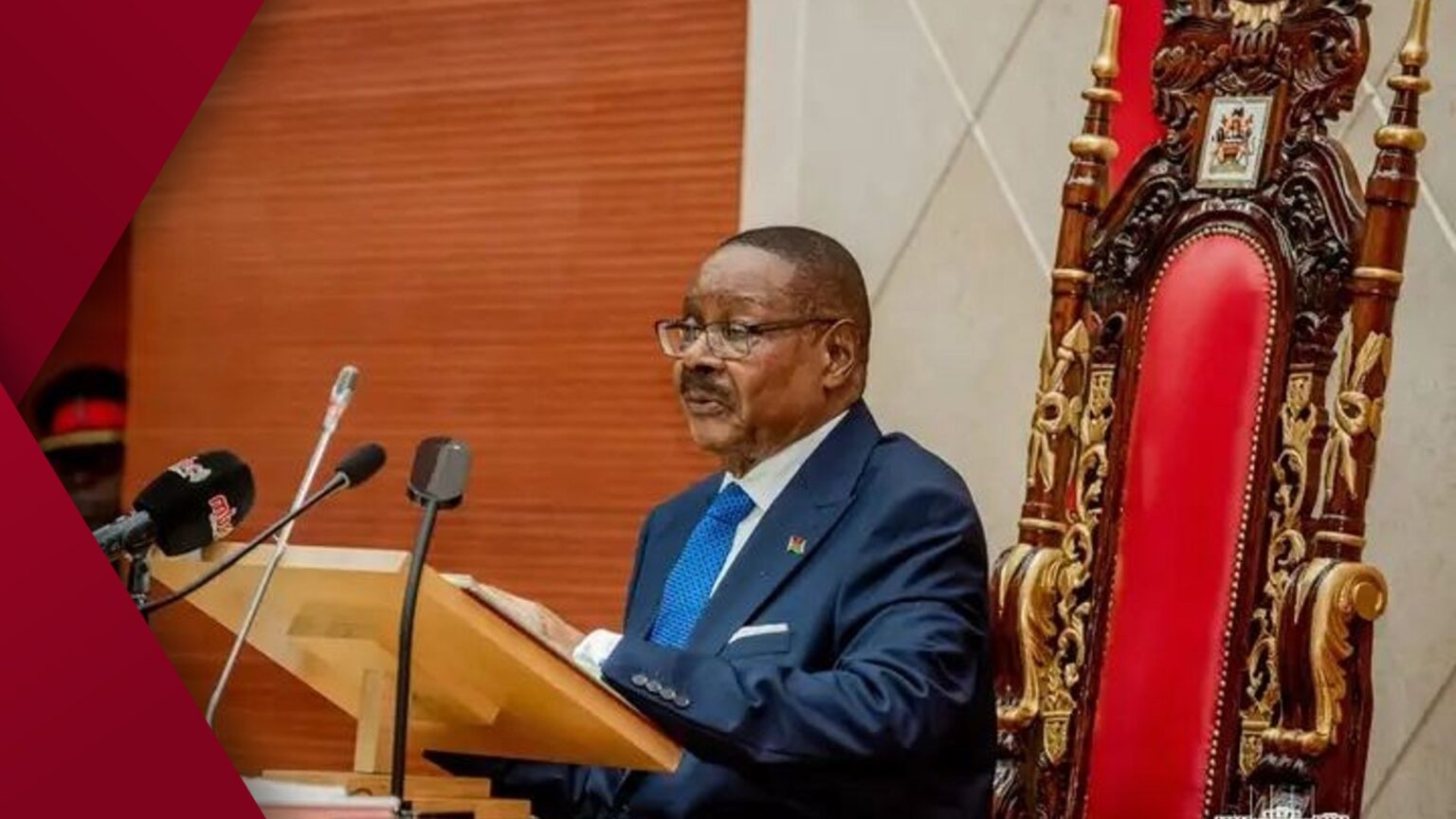
Malawi’s Mutharika Launches Stabilization Program Amid Economic Challenges. Lilongwe, Malawi — February 13, 2026 Malawi’s President Arthur Peter Mutharika has outlined a comprehensive economic recovery plan, emphasizing the need for fiscal discipline and institutional reform. Addressing the opening of the 2026/2027 Budget Meeting in Lilongwe, Mutharika described the program as a national reset, marking the first full implementation of the Democratic Progressive Party (DPP) agenda since regaining power.
The President highlighted the nation’s economic struggles, including soaring inflation, depleted foreign exchange reserves, and weakened public institutions.
However, he emphasized that the country is now stabilizing, with early signs of progress in restoring financial discipline and rebuilding institutional credibility.
In just four months, the administration has taken several measures, including halting fraudulent contracts, reducing non — essential spending, and conducting a comprehensive personnel audit to eliminate ghost workers.
Public appointments are now based on merit, according to Mutharika. Urgent interventions have also been deployed to stabilize markets and supply chains.
The government has secured maize to alleviate hunger, procured fertilizer to protect agricultural output, and restocked fuel to revive private sector activity.
Macroeconomic indicators suggest early signs of traction. Inflation, which reached a peak of 28.
7 percent in September 2025, is projected to fall below 21 percent in 2026.
Economic growth is expected to rise from 2. 7 percent to 3.
8 percent next year, accelerating further to 4.
9 percent in 2027.
The government is also reviewing forex regulations, expanding gold purchases, and exploring gold monetization to strengthen reserves and improve liquidity. Austerity measures, including reduced ministerial fuel allocations and tighter travel controls, signal a shift toward fiscal prudence.
One of the most significant policy moves includes raising the Constituency Development Fund from MK220 million to MK5 billion per constituency annually.
This reform transfers financial oversight to local controlling officers and introduces a national digital dashboard for real — time public monitoring of spending. Mutharika outlined a strategic shift for Malawi, aiming to move from an importing economy to a producing and exporting one.
Special Economic Zones in Magwero, Chigumula, Matindi, and Dunduzu are central to this ambition.
Support for SMEs and cooperatives will expand to encourage value addition and import substitution. Energy generation is targeted to exceed 1,000 megawatts by 2030, with recent capacity restorations and new solar and biomass additions marking early progress.
Fuel storage capacity will double, enhancing supply stability.
In the aviation sector, Malawi Airlines is expected to expand its fleet from three to ten aircraft in partnership with Ethiopian Airlines, improving international connectivity and trade access.
The government has suspended new mining licenses pending audits and temporarily banned raw mineral exports to strengthen regulatory oversight.
Plans are also in place to establish a Sovereign Wealth Fund to ensure mineral revenues translate into lasting national benefit. For international partners, the direction is clear: Malawi intends to negotiate smarter, regulate stronger, and capture more value domestically.
Education and health funding have expanded significantly, with free secondary education in public schools now operational and university loan beneficiaries increasing to 38,000.
Health funding has expanded significantly, supported by a five — year US$744 million grant from the United States Government. Youth and women entrepreneurship funds, alongside grants for persons with disabilities, signal a broader social financing framework aimed at inclusive growth.
The President concluded with a firm anti — corruption pledge and a directive for full digital transformation across public institutions.
Vice President Jane Ansah attended the official opening of the Budget Meeting, underscoring the administration’s unified front. Malawi is not merely managing crisis but positioning for recovery, according to Mutharika.
The success of the recovery mission will depend on implementation, with early indicators suggesting it may be gaining ground.