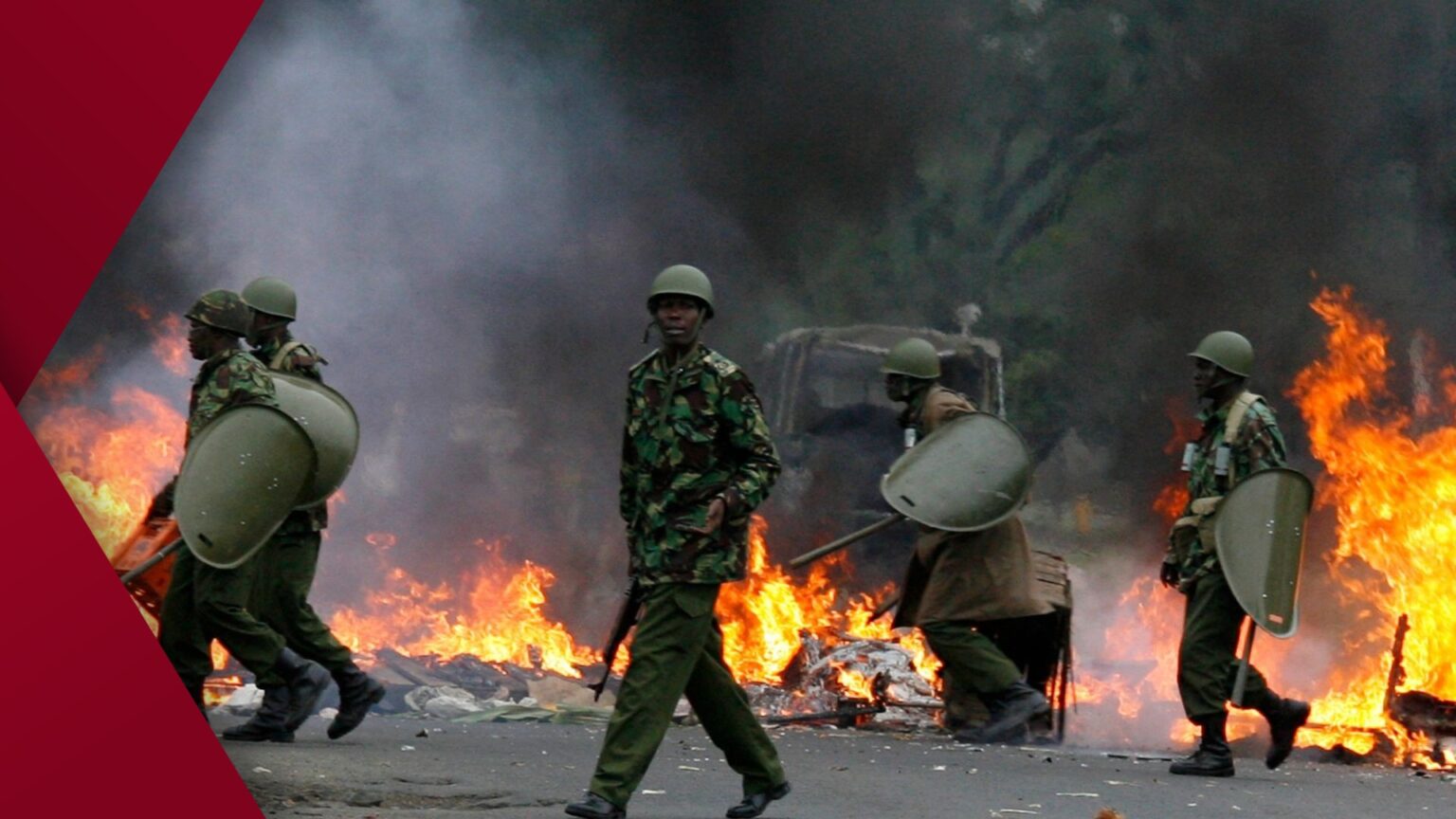
Kenya’s 2026 General Election: A Brewing Storm of Electoral Tensions. Nairobi, Kenya — As Kenya prepares for its next general election, due in less than 20 months, concerns are rising about the potential for electoral violence.
The country’s complex history of state-generated violence during elections suggests that 2026 could be a volatile year unless immediate and decisive action is taken to bolster electoral integrity and transparency.
Since the reintroduction of multiparty politics in 1991, Kenya has experienced significant violence during four of its seven competitive presidential elections. This violence was almost exclusively associated with the reelection bids of unpopular incumbents.
The absence of an incumbent on the ballot, as was the case in 2002, 2013, and 2022, resulted in relatively muted electoral tensions.
Kenya has made strides in improving the credibility of its election system, notably through the 2010 constitution, which introduced checks on the exercise of state power and an independent judiciary.
However, recent developments raise serious concerns about the credibility of the Independent Electoral and Boundaries Commission (IEBC), which is tasked with overseeing the elections.
The reconstitution of the IEBC in July 2023, following a legal challenge, was met with controversy, casting doubt on the commission’s independence.
The IEBC’s handling of recent by-elections, characterized by chaos and violence, further eroded public confidence in its ability to conduct a fair and peaceful election.
The Kenyan media also plays a crucial role in shaping public perception and confidence in the electoral process. For years, major media outlets have been hesitant to independently aggregate and report vote tallies, contributing to a lack of transparency and trust in the election outcomes.
In addition to these internal challenges, Kenya is facing a regional and global context that is increasingly conducive to electoral manipulation and disinformation.
The normalization of repression in neighboring countries, coupled with a broader collapse in global accountability, has raised concerns about the potential for external interference in the upcoming elections.
As the situation unfolds, it is crucial for Kenya’s political leaders, civil society, the media, and international partners to take urgent action to safeguard the electoral process.
This includes addressing the credibility of the IEBC, enhancing media independence and accountability, and combating disinformation. Urgent reforms to insulate independent state institutions from political interference are also needed.
The window for these reforms is closing fast, and the stakes are high.
Failure to act could lead to a repeat of past electoral violence, undermining Kenya’s democratic progress and stability. Further details are expected as the country moves closer to the 2026 general election.
Kenya’s ability to navigate this critical period without resorting to violence and electoral manipulation will be a testament to its commitment to democratic principles.
*Additional reporting by ImNews | Sources consulted: 5*